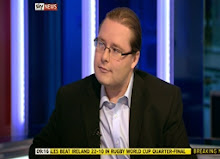
A short video has been released to me by EDF, sponsor of the Regional Media Awards, of me collecting my award this week.
Showing posts with label reporter. Show all posts
Showing posts with label reporter. Show all posts
Saturday, 28 February 2015
Wednesday, 18 February 2015
Wilko Johnson Interview
Two years ago, rock legend Wilko Johnson had just been told he had 10 months to live. Doctors had diagnosed the Dr Feelgood guitarist with terminal pancreatic cancer. Refusing treatment, which would have scarcely extended his life, he announced a 'farewell tour' and embarked on one of the wildest years of his career, playing to enormous festival crowds and recording an album with The Who front man Roger Daltrey. Comprised of his own material, it was Wilko's biggest hit since his number one album Stupidity with Dr Feelgood in 1976. He never expected to live long enough to see it released.

But last week I enjoyed a frank and funny hour-long interview with Wilko, who is still very much alive. More than a year after receiving his bleak diagnosis, when experts started to wonder why he wasn't dead yet, he underwent further tests. On closer inspection, doctors told him his cancer had not been terminal after all - only now, after having left it untreated for over a year, it had grown into a three kilogram, football-sized tumour, which had spread to his spleen and part of his stomach. Last summer he underwent a pioneering, experimental operation. Amazingly, doctors removed every trace of cancer - albeit along with his pancreas, leaving him diabetic - and now Wilko is taking his first tentative steps back into the music industry.
Ahead of a comeback tour and a raft of summer festival dates, Wilko was friendly, candid and extremely funny - as he always is. It was not the first time I have interviewed him. In September 2013 I was the first journalist in the world to reveal he was working on a project with Roger Daltrey. At the time, he was expected to die within weeks.

During our conversation, we covered everything from how he writes songs to his nerves about returning to the stage after the longest absence of his adult life. We discussed his time in hospital, including how the mind-altering after-effects of the massive dose of anaesthetic needed for his 12-hour operation led him to stage a dangerous, if amusing, escape attempt when he woke up. Along the way we also discussed his charitable efforts for the hospital which saved his life, and why he isn't angry at the doctors who wrongly told him he was terminally ill.
Wilko also revealed that he is the subject of a new documentary, directed by Julien Temple, who has made music videos for Janet Jackson, Whitney Houston and Davie Bowie. Temple also directed Oil City Confidential, the hugely popular documentary about the origins of Dr Feelgood.
It was wonderful to find Wilko on such good form. The last time I spoke to him, 'knowing' - so we all thought - that he'd be dead by Christmas, was extremely sad, not least because he's such a friendly, funny and vibrant man. I look forward to catching one of his comeback concerts.
(Click to enlarge.)
Wilko on stage in 2013.
Picture by Charles Thomson.
But last week I enjoyed a frank and funny hour-long interview with Wilko, who is still very much alive. More than a year after receiving his bleak diagnosis, when experts started to wonder why he wasn't dead yet, he underwent further tests. On closer inspection, doctors told him his cancer had not been terminal after all - only now, after having left it untreated for over a year, it had grown into a three kilogram, football-sized tumour, which had spread to his spleen and part of his stomach. Last summer he underwent a pioneering, experimental operation. Amazingly, doctors removed every trace of cancer - albeit along with his pancreas, leaving him diabetic - and now Wilko is taking his first tentative steps back into the music industry.
Ahead of a comeback tour and a raft of summer festival dates, Wilko was friendly, candid and extremely funny - as he always is. It was not the first time I have interviewed him. In September 2013 I was the first journalist in the world to reveal he was working on a project with Roger Daltrey. At the time, he was expected to die within weeks.
(Click to enlarge.)
Wilko on stage in 2013.
Picture by Charles Thomson
During our conversation, we covered everything from how he writes songs to his nerves about returning to the stage after the longest absence of his adult life. We discussed his time in hospital, including how the mind-altering after-effects of the massive dose of anaesthetic needed for his 12-hour operation led him to stage a dangerous, if amusing, escape attempt when he woke up. Along the way we also discussed his charitable efforts for the hospital which saved his life, and why he isn't angry at the doctors who wrongly told him he was terminally ill.
Wilko also revealed that he is the subject of a new documentary, directed by Julien Temple, who has made music videos for Janet Jackson, Whitney Houston and Davie Bowie. Temple also directed Oil City Confidential, the hugely popular documentary about the origins of Dr Feelgood.
Oil City Confidential Trailer.
It was wonderful to find Wilko on such good form. The last time I spoke to him, 'knowing' - so we all thought - that he'd be dead by Christmas, was extremely sad, not least because he's such a friendly, funny and vibrant man. I look forward to catching one of his comeback concerts.
To listen to the extended interview, including all the bits that simply did not fit in the newspaper, click here.
To read my interview feature with Wilko, click here.
To read my interview feature with Wilko, click here.
To read about the new documentary, click here.

Awards Nominations
A short note to say I am extremely flattered and grateful to have been nominated for two Regional Media Awards.
I have been nominated for 'Print Journalist of the Year' on a weekly newspaper, and a road safety campaign I ran following the death of a young musician has been shortlisted for 'Community Campaign of the Year'.
Among the articles for which my 'Print Journalist' nomination was awarded were two investigative pieces and one campaigning piece about the above road death.
The first investigative piece was the revelation that hundreds of teachers accused of sexual abuse had never been reported to police by the education authority, despite dozens of them having the complaints upheld and receiving professional sanctions.

The second told how a Government Jobcentre had unwittingly signed up an escaped con, fleeing a life sentence for a brutal attack with an iron bar, and sent him to work for a local company. Despite using a known alias, his identity was only discovered when he threatened to murder his new boss over a pay dispute, at which his boss Googled his name and discovered him on a Crimestoppers 'Most Wanted' list. Jobcentre staff then refused to give police the dangerous criminal's address, claiming it was 'personal information'.

I will find out whether I have won at a ceremony in late February, although just to be nominated is very rewarding, as the shortlist is selected by a panel of experienced journalists.
I have been nominated for 'Print Journalist of the Year' on a weekly newspaper, and a road safety campaign I ran following the death of a young musician has been shortlisted for 'Community Campaign of the Year'.
Among the articles for which my 'Print Journalist' nomination was awarded were two investigative pieces and one campaigning piece about the above road death.
The first investigative piece was the revelation that hundreds of teachers accused of sexual abuse had never been reported to police by the education authority, despite dozens of them having the complaints upheld and receiving professional sanctions.
The second told how a Government Jobcentre had unwittingly signed up an escaped con, fleeing a life sentence for a brutal attack with an iron bar, and sent him to work for a local company. Despite using a known alias, his identity was only discovered when he threatened to murder his new boss over a pay dispute, at which his boss Googled his name and discovered him on a Crimestoppers 'Most Wanted' list. Jobcentre staff then refused to give police the dangerous criminal's address, claiming it was 'personal information'.
I will find out whether I have won at a ceremony in late February, although just to be nominated is very rewarding, as the shortlist is selected by a panel of experienced journalists.
Thursday, 15 January 2015
'Play Virtual, Live Real'; The Murder of Breck Bednar
This week I covered the court case of Lewis Daynes, who was convicted of murdering 14-year-old schoolboy Breck Bednar. This was one of the most harrowing cases I have ever sat in. Some of the details were so distressing they could not be included in my newspaper coverage.
I will upload the full text of my five-page special report as soon as I am able. As far as I can ascertain, this is the most in-depth report which has been filed from the courtroom.
Click the below images, of the report as it appeared in the newspaper, to enlarge.


I will upload the full text of my five-page special report as soon as I am able. As far as I can ascertain, this is the most in-depth report which has been filed from the courtroom.
Click the below images, of the report as it appeared in the newspaper, to enlarge.


Monday, 4 March 2013
"Highly Commended"
"Judges described Charles Thomson as having a good writing style and being 'a credit to the newsroom', but also a livewire who at times must 'turn his editor's hair white'."

I was honoured this month to receive a 'Highly Commended' award in the 'Newcomer of the Year' category at the EDF Regional Media Awards. I was handed the prize for a portfolio of stories produced within the last year.
The collection included a series of interviews with Lord Hanningfield, detailing his life after being convicted and jailed for expenses fraud in 2011. I was also nominated for a gonzo piece detailing my thwarted attempt to interview former TV star Michael Barrymore, who instead turned the tables on me, pulled me on-air and grilled me on the radio.
The judges nominated me also for two court stories - one in which I single-handedly challenged and overturned a ruling which blocked the identification of a criminal who downloaded over 100,000 child sex abuse images, and another in which I uncovered a child abuse cover-up by the Jehovah's Witness church.
I love my job and to receive this commendation was simply the cherry on top of a fantastic year.
The collection included a series of interviews with Lord Hanningfield, detailing his life after being convicted and jailed for expenses fraud in 2011. I was also nominated for a gonzo piece detailing my thwarted attempt to interview former TV star Michael Barrymore, who instead turned the tables on me, pulled me on-air and grilled me on the radio.
The judges nominated me also for two court stories - one in which I single-handedly challenged and overturned a ruling which blocked the identification of a criminal who downloaded over 100,000 child sex abuse images, and another in which I uncovered a child abuse cover-up by the Jehovah's Witness church.
I love my job and to receive this commendation was simply the cherry on top of a fantastic year.
Thursday, 10 January 2013
Award Nomination
A happy topic for my first blog of 2013.
I received a text message from my editor this afternoon - I was crossing the River Thames from Gravesend to Tilbury on a dilapidated ferry at the time (long story) - to tell me I had been nominated in the Best Newcomer category at the EDF regional press awards. Although I have worked as a freelance reporter since 2008, I only began full time work on a regional newspaper in late 2011.
I've been nominated for a trio of stories. The first was a gonzo account of my thwarted attempt to interview controversial former TV presenter Michael Barrymore. Barrymore, for those who don't know, was the king of British primetime TV in the 1990s but his career was left in tatters when a dead man was found floating in his swimming pool after a drug-fuelled party. DNA cleared Barrymore of any involvement in the man's death but the scandal was sufficient to ruin him.
I arrived at a secret location, where Barrymore was recording a guest show for a local radio station, under the impression that he had agreed to an interview. He denied ever agreeing to any such thing and seemed quite perturbed by my arrival, but allowed me to stay on the condition that I sat quietly and didn't ask him any questions. That didn't last long.
About a third of the way into the recording he began interrogating me on-air. "I'm interviewing a journalist!" he declared. His refusal to give me an interview became a running joke throughout the broadcast and his antics were perfect fodder for a first-person feature. The icing on the cake was that after our radio chatter he did give me a few exclusive nuggets for the newspaper after all.
The second piece I've been nominated for was a court story about a local man who had been caught in possession of more than 100,000 images of child sex abuse. Several hundred were considered to depict the most shocking and sadistic level of abuse. There were videos too.
Sadly, that is not a particularly uncommon story. What made this scenario unusual was that I arrived at the courthouse to discover that a magistrates court had slapped a bizarre reporting restriction on the case in a previous hearing. They had banned any publication of the man's address because he did not live alone and they said his family could suffer from vigilantism.
UK libel laws dictated that preventing the publication of the man's address amounted to a blanket ban on all reporting of the case. In a large town it is highly likely that somebody will have at least one namesake. There will be lots of John Smiths, for example. If I put in the paper that John Smith has been convicted of possessing child porn - but don't include his address - every other John Smith in town can sue me and my newspaper for defamation by claiming the report caused their neighbours to think they were the convicted pervert.
In my view, the reporting restriction was a nonsense. Firstly, making court orders to prevent vigilantism is like putting signs up in car parks reminding people that it is illegal to steal cars. People don't need to be reminded that it is wrong. Everybody knows that it is wrong. It is already regulated by existing laws.
But more importantly, I was alarmed by the potential precedent of a ruling which said that because a child porn collector did not live on his own, he should not be held publicly accountable for his crimes. What of future cases? Could all paedophiles ensure their anonymity by simply moving in with somebody?
I raised the issue with the court clerk, who in turn agreed to pass my concerns to the judge. However, the clerk forgot and the hearing concluded. Just as the judge was about to rise, I stood and addressed him. He sat back down.
The defence barrister and I swapped legal arguments and the judge deliberated. He sided with me, concluding that the restriction set a disturbing precedent. He ordered that it be lifted so I could publish details of the man's crimes. It turned out I was the first reporter at our newspaper to ever overturn a reporting restriction completely off the cuff - reporters are usually aware of them and able to plan their arguments for days before the hearing.
Three months later I stumbled across the story that would lead to my third nominated article - again at the local courthouse and again involving child abuse. I knew that a man called Barry Snow was due in court over alleged child abuse. I didn't know that the circumstances of his offending would lead the presiding judge to publicly criticise the Jehovah's Witness church over its handling of child sex abuse cases.
Snow had repeatedly molested a girl under the age of 10 in the late 1970s, when he was in his late teens. His crimes were reported to the Jehovah's Witness church, where he was a dedicated member. Instead of reporting the abuse to police, church elders handled the matter internally. Snow went on to molest several more children.
At first I assumed that the church elders had committed a criminal offence by failing to report the abuse to police. But after a little digging I discovered that this was not the case. Counter-intuitive though it may seem, in the UK there is no statutory obligation for anybody - even a school - to report suspected child abuse. If you sign your child up to a scouts group or a football team or a nursery and they suffer abuse while they are there, they have no statutory right to have that abuse reported to the authorities.
The result was a news feature which used the Barry Snow case as a springboard to explore the ongoing but little-known campaign in the UK to introduce laws requiring schools and other children's organisations to report suspected child abuse to police. Just a few weeks after it was published, the Jimmy Savile scandal erupted and sent shockwaves around the country, bringing this very subject to the forefront of popular debate.
I haven't yet heard where or when the ceremony will be held. I have no idea what articles any of the other nominees have been shortlisted for and I certainly won't go in the expectation of winning. I didn't even think I'd be nominated. But it is an honour that I have been, and I am most grateful.

I received a text message from my editor this afternoon - I was crossing the River Thames from Gravesend to Tilbury on a dilapidated ferry at the time (long story) - to tell me I had been nominated in the Best Newcomer category at the EDF regional press awards. Although I have worked as a freelance reporter since 2008, I only began full time work on a regional newspaper in late 2011.
I've been nominated for a trio of stories. The first was a gonzo account of my thwarted attempt to interview controversial former TV presenter Michael Barrymore. Barrymore, for those who don't know, was the king of British primetime TV in the 1990s but his career was left in tatters when a dead man was found floating in his swimming pool after a drug-fuelled party. DNA cleared Barrymore of any involvement in the man's death but the scandal was sufficient to ruin him.
I arrived at a secret location, where Barrymore was recording a guest show for a local radio station, under the impression that he had agreed to an interview. He denied ever agreeing to any such thing and seemed quite perturbed by my arrival, but allowed me to stay on the condition that I sat quietly and didn't ask him any questions. That didn't last long.
About a third of the way into the recording he began interrogating me on-air. "I'm interviewing a journalist!" he declared. His refusal to give me an interview became a running joke throughout the broadcast and his antics were perfect fodder for a first-person feature. The icing on the cake was that after our radio chatter he did give me a few exclusive nuggets for the newspaper after all.
The second piece I've been nominated for was a court story about a local man who had been caught in possession of more than 100,000 images of child sex abuse. Several hundred were considered to depict the most shocking and sadistic level of abuse. There were videos too.
Sadly, that is not a particularly uncommon story. What made this scenario unusual was that I arrived at the courthouse to discover that a magistrates court had slapped a bizarre reporting restriction on the case in a previous hearing. They had banned any publication of the man's address because he did not live alone and they said his family could suffer from vigilantism.
UK libel laws dictated that preventing the publication of the man's address amounted to a blanket ban on all reporting of the case. In a large town it is highly likely that somebody will have at least one namesake. There will be lots of John Smiths, for example. If I put in the paper that John Smith has been convicted of possessing child porn - but don't include his address - every other John Smith in town can sue me and my newspaper for defamation by claiming the report caused their neighbours to think they were the convicted pervert.
In my view, the reporting restriction was a nonsense. Firstly, making court orders to prevent vigilantism is like putting signs up in car parks reminding people that it is illegal to steal cars. People don't need to be reminded that it is wrong. Everybody knows that it is wrong. It is already regulated by existing laws.
But more importantly, I was alarmed by the potential precedent of a ruling which said that because a child porn collector did not live on his own, he should not be held publicly accountable for his crimes. What of future cases? Could all paedophiles ensure their anonymity by simply moving in with somebody?
I raised the issue with the court clerk, who in turn agreed to pass my concerns to the judge. However, the clerk forgot and the hearing concluded. Just as the judge was about to rise, I stood and addressed him. He sat back down.
The defence barrister and I swapped legal arguments and the judge deliberated. He sided with me, concluding that the restriction set a disturbing precedent. He ordered that it be lifted so I could publish details of the man's crimes. It turned out I was the first reporter at our newspaper to ever overturn a reporting restriction completely off the cuff - reporters are usually aware of them and able to plan their arguments for days before the hearing.
Three months later I stumbled across the story that would lead to my third nominated article - again at the local courthouse and again involving child abuse. I knew that a man called Barry Snow was due in court over alleged child abuse. I didn't know that the circumstances of his offending would lead the presiding judge to publicly criticise the Jehovah's Witness church over its handling of child sex abuse cases.
Snow had repeatedly molested a girl under the age of 10 in the late 1970s, when he was in his late teens. His crimes were reported to the Jehovah's Witness church, where he was a dedicated member. Instead of reporting the abuse to police, church elders handled the matter internally. Snow went on to molest several more children.
At first I assumed that the church elders had committed a criminal offence by failing to report the abuse to police. But after a little digging I discovered that this was not the case. Counter-intuitive though it may seem, in the UK there is no statutory obligation for anybody - even a school - to report suspected child abuse. If you sign your child up to a scouts group or a football team or a nursery and they suffer abuse while they are there, they have no statutory right to have that abuse reported to the authorities.
The result was a news feature which used the Barry Snow case as a springboard to explore the ongoing but little-known campaign in the UK to introduce laws requiring schools and other children's organisations to report suspected child abuse to police. Just a few weeks after it was published, the Jimmy Savile scandal erupted and sent shockwaves around the country, bringing this very subject to the forefront of popular debate.
I haven't yet heard where or when the ceremony will be held. I have no idea what articles any of the other nominees have been shortlisted for and I certainly won't go in the expectation of winning. I didn't even think I'd be nominated. But it is an honour that I have been, and I am most grateful.

Wednesday, 25 July 2012
'When Are We Going To Start Being Disobedient?'
A few weeks ago I went to a couple of events at the London Literature Festival. The first was an evening with legendary investigative journalist John Pilger, whose work I have admired ever since I had to write an essay about him when I was studying for my journalism degree.
Pilger's career is now in its sixth decade. His documentary films are some of the most celebrated and respected in all 20th and 21st century journalism. His work on the forgotten victims of the Thalidomide scandal helped secure government compensation for several sufferers who had previously been denied any financial aid. As a war correspondent he has consistently revealed the stories we are never told about our troops' activities in far-flung lands and the devastation they leave behind.
In later years his focus shifted slightly from the atrocities themselves to the media's often biased or simply non-existent coverage of them. Not one to rest on his laurels, he continues to ruffle government feathers. His latest film 'The War You Don't See' - all about the so-called war on terrorism - was banned in the USA.
He appeared on-stage at the Southbank Centre's Queen Elizabeth Hall in conversation with BBC's Robin Denselow. Topics ranged from government censorship to the pointlessness of twitter to the 'heroic' Julian Assange. I wrote a report about the event for the Yellow Advertiser, which I'm now uploading here:
Pilger's career is now in its sixth decade. His documentary films are some of the most celebrated and respected in all 20th and 21st century journalism. His work on the forgotten victims of the Thalidomide scandal helped secure government compensation for several sufferers who had previously been denied any financial aid. As a war correspondent he has consistently revealed the stories we are never told about our troops' activities in far-flung lands and the devastation they leave behind.
In later years his focus shifted slightly from the atrocities themselves to the media's often biased or simply non-existent coverage of them. Not one to rest on his laurels, he continues to ruffle government feathers. His latest film 'The War You Don't See' - all about the so-called war on terrorism - was banned in the USA.
He appeared on-stage at the Southbank Centre's Queen Elizabeth Hall in conversation with BBC's Robin Denselow. Topics ranged from government censorship to the pointlessness of twitter to the 'heroic' Julian Assange. I wrote a report about the event for the Yellow Advertiser, which I'm now uploading here:
‘When are we going to start being disobedient?’ asks John Pilger
(Written: Sat 14th July 2012)

Picture courtesy of Southbank Centre press office. Photographer: Garaint Lewis.
“The institution of so-called mainstream journalism lets
people down,” John Pilger said bluntly at the London Literature Festival this
week.
For six decades, Pilger’s books, articles and films have revealed the atrocities committed in distant lands by Western governments and the media’s apparent willingness to cover them up.
His most recent film, 2010’s The War You Don’t See, examined Western reporting on the ‘war on terror’ and what the media doesn’t tell us about our troops’ activities.
Perhaps unsurprisingly, it was banned in America.
Interviewed by the BBC’s Robin Denselow before a sold-out audience at the Queen Elizabeth Hall, Pilger said the media is obsessed with immediacy and bombards us with the ephemeral.
“I think we have two goals” he said of the media’s role in society. “One is to do as best we can to try and find out what the hell is going on: ie. Truth.
“Two, I think our job is to call those in charge of so much of our lives to account – and we don’t.”
Part of the problem is the ‘cosy relationship’ between journalists and politicians, he argued – and this stems from budding reporters being taught to seek information from official sources.
“It’s certainly something that those who teach journalists should think about,” he said. “Even the academic side to journalism perpetuates this idea that there is simply a narrow form of journalism and that the main source for journalism comes from above, not from below.
“I think too many young journalists believe that they’re sort of ordained as journalists if they take on a kind of fake impartiality and a skepticism about their readers, viewers and listeners – instead of a skepticism about authority.”
Pilger said this mindset was obvious in the coverage of the Iraq War.
He complained that almost all media outlets had wound up perpetuating the ‘demonstrably made-up’ story about the existence of WMDS because they had fallen into the common journalistic trap of seeking information from ‘authoritative’ sources.
“I think truth is much more important than running the voice of authority,” he said. “It will be an imperfect journey, but getting somewhere near what might be the truth is what it really ought to be about. Not getting the voice of authority versus the opposing voice and calling that impartiality.”
BBC man Robin Denselow attracted Pilger’s ire by suggested that the expensiveness of investigative journalism is a complicating factor.
“Investigations don’t cost a fraction of, say, the Human Resources staff at the BBC,” Pilger retorted, “and the scandal of the management of the BBC and their Bob Diamond impulses. That should all be going into investigative journalism.”
A ‘seismic shift’ is needed in journalism, Pilger continued: “We need a fifth estate – not a fourth estate anymore – in which we stop thinking that journalism that is beholden to the State or to the Corporate State is independent. It isn’t. It’s an extension.”
However, Pilger did not offer any suggestion as to how journalists working independently of the State or the Corporate State might fund their investigations.
Julian Assange was about the only media figure to escape Pilger’s wrath.
Describing Assange’s Wikileaks releases as ‘almost heroic’, Pilger accused the media of turning on him.
The backlash came, he said, because Wikileaks illuminated mainstream journalism’s failings.
“It arrived with scoop after scoop after scoop, telling us what we should have been told by investigative journalists and current affairs programmes... That’s one of the reasons, in my view, that Wikileaks caused so much angst and anger amongst mainstream journalists. Because it shamed journalism. It went into areas that journalists had let alone.
“I think what we’ve had is a kind of malevolent Greek chorus about Julian Assange. I think the coverage of Assange is one of the great stains on journalism. You only have to read the truly malign, almost malignant, tweets from well-known journalists. I suppose that’s the value of Twitter, isn’t it? Because out pops what they really want to say.”
Overall, Pilger isn’t especially impressed by social networking sites. Their contribution to journalism, he said, had been ‘utterly exaggerated’.
“Does it help us to make sense of things?” he asked. “I think that’s what’s missing. We’re bombarded by the ephemeral. There’s an avalanche of it.”
Twitter, he said, is just another example of the media’s growing obsession with immediacy – an obsession which breeds homogeny and robs reporting of any real depth or insight.
“I’m so pleased I had nothing to do with the constant voice in your ear when you’re in Baghdad or somewhere else,” he said of his own TV career. “You’re on duty 24 hours a day and you’re being forced to keep something going but there’s no time gap. There’s no time for reflection on what you’ve seen.
“I don’t think that leaves them anywhere to go but to the press conference. To follow where everyone else is going – to cover themselves. You’ve got to cover what the competition is doing.”
For all his complaints about journalism’s current state, Pilger said he wasn’t depressed about its future – because as long as young journalists understand the industry’s problems, they can work around them.
He explained: “The advent of young journalists understanding [the problems], but not giving up on journalism; Learning to navigate their way through systems and challenging systems if that’s possible in these economically strapped times – I think that’s very, very encouraging.”
There is no greater job, he said, than being a reporter.
“I believe very strongly in being a reporter,” he told the crowd, “and being a witness. I think that sense of being a reporter is something that I have always been proud to be – because it’s such a privilege. People allowing you into their homes, trusting you and telling you their stories.”
The event closed with an audience question about the lack of public protest in
these turbulent times.
“What has happened to protest?” the audience member asked. “Why are the numbers
so low? Where the hell is everyone?”
“I ask that question myself,” Pilger replied. “But it still can happen and it
can happen in a mass sense. In those countries where it can’t happen, it does happen – and we should draw inspiration
from them.”
He recalled that American activist Howard Zinn once said, "It's not mass civil disobedience that is the problem. It's mass civil obedience."
Before the lights went up, Pilger asked the audience: "When are we going to start being disobedient?"

Charles Thomson and John Pilger at the London Literature Festival.
An edited audio recording of John Pilger in conversation is available for download on the London Literature Festival website.
Thursday, 26 May 2011
Radio Silence
It's been more than eight weeks since I last blogged and this is only my fourth entry since January. The reason is that I've thrown myself into my work of late - albeit a different type of work to what many of you are familiar with.
For the last five months I've been spending, on average, between three and five days per week at my local courthouse. During this time I've witnessed pretty much every stage of the legal process - arraignments, trials, sentences, appeals and more. The trials I've sat through have encompassed everything from rape to child molestation, domestic violence to perverting the course of justice, indecent exposure to actual bodily harm.
The idea came to me during dinner with a friend who is ensconced in his exams to become a barrister. As part of his course he'd spent a period of time shadowing a judge at the local courthouse and was telling me about the interesting cases he'd witnessed.
It occurred to me that the courthouse was potentially an untapped source of local and national news stories; who knew what was going on inside that building? I certainly wasn't reading anything about any of the cases my friend had observed in either the local or the national press. I decided that if nobody else was going to write about them, I'd give it a shot.
Often fascinating and occasionally disturbing, the past five months have been revelatory, to say the least. I've embarked on an exploration not only of the court system and its workings but also the courts' relationship with the media and, sadly, the media's failings which it comes to reporting on our justice system.
I've seen prosecutors force defendants to stand trial on the flimsiest of evidence and not be held to account for their arrogance. I've seen judges let off paedophiles with minor sentences when their offences could easily have merited several years behind bars.
I've seen one person convicted of a crime which I saw no evidence that they'd committed. I also witnessed 'churnalism' in action when a news agency journalist showed up for twenty minutes of a three week trial and then had their story circulated internationally.
The first trial I sat through was a fascinating introduction. A local man stood accused of domestic violence resulting in actual bodily harm to his then pregnant girlfriend. Giving evidence for the prosecution, the claimant sobbed repeatedly as she claimed that the defendant had attacked her and attempted to kill her unborn baby. But as she underwent cross-examination it became clear that her claims just didn't stack up.
Photographs of her injuries didn't tally with her description of the alleged assault. She claimed to have had her head smashed repeatedly against a wall and a door, as well as receiving numerous blows to the head and face from the defendant's fists. She even said that the defendant had bitten her hard on the cheek - but police photographs showed only two or three small marks on her face; no large bruises, no cuts and no bite marks.
Her version of events changed repeatedly between her police interview, a deposition she gave in order to prevent the defendant from visiting his child and then her courtroom testimony during his trial. On the stand she seemed to strategically omit certain claims she'd earlier made to police, which she knew were unsupported by any evidence.
These included a claim that the defendant had torn her nipple during the alleged assault and her shirt had been 'covered in blood'. The nipple injury was neither noted nor photographed by police and the bloodied shirt was nowhere to be found, even though she'd gone to the police within hours of the attack having supposedly taken place.
Her allegations were further undermined when a police officer took the stand and testified that the defendant had been helpful in his police interview and his story, unlike the claimant's, had remained consistent. He had not only waved his right to remain silent but also his right to a lawyer, telling police he'd done nothing wrong so he didn't need one. He even volunteered his mobile phone to officers for analysis and police found that the confused text messages he'd sent the claimant tallied with his claim that he didn't know why she'd disappeared with all her stuff that morning.
Significantly, the police officer noted upon the defendant's arrest, less than 24 hours after the alleged incident, that he had no cuts, bruises or markings to his fists or any other part of his body.
Two defence witnesses testified that the claimant had a history of self-harming and could have self-inflicted the handful of injuries she actually exhibited when she contacted police. Both testified that the claimant had told them she'd previously spent time in the Priory Clinic receiving treatment for drugs, alcohol and self-harm issues.
Attempts to obtain the claimant's Priory records were derailed when the clinic informed police that they'd recently switched to a new computer filing system and couldn't look far back enough to check whether she'd been a patient before the alleged attack. It emerged, though, that she had been treated for self-harm issues at the Priory after the alleged incident.
Further doubt was shed on the claimant's version of events when a defence witness testified that she'd seen the claimant on the morning after the alleged attack but before she went to police. The witness testified that the claimant's hair had been tied back that morning and she hadn't displayed any visible injuries.
The defendant's belief, he said on the stand, was that his girlfriend had decided that she didn't want to be in a relationship with him anymore but knew that the child would ensure his continued presence in her life. Her solution, he posited, was to fabricate the assault because it allowed her to obtain a court order preventing him from seeing his child and therefore from seeing her. In the months since she'd left, his child had been born and he had no idea what it was called or even what sex it was or whether it was healthy.
A jury of six men and six women took roughly one hour to acquit the defendant on the third day of his trial - but he was less concerned with the verdict than he was with the health of his 80-year-old grandmother, who was in hospital after crashing her car that morning on her way to court to support him; a journey she'd never have embarked on if the borderline deranged prosecution hadn't gone forward in the first place.
I was relieved to see the defendant acquitted because the doubt in that case was beyond reasonable. At the very least, the claimant appeared to have fabricated aspects of the alleged assault but some evidence, such as the defendant's lack of injuries, strongly suggested that the incident was simply the product of her imagination.
It could easily have gone the other way, though. Some crimes - particularly crimes against women and children - are emotive. You have only to mention them and the jury is already horrified. All it takes is a good prosecutor (or a bad defender) or even for the jury to simply look the defendant up and down and decide that he looks like the type - and things can go awry.
During my first few weeks at the courthouse I realised that I was, generally, the only journalist in the building. If I hadn't been sitting in that courtroom and the verdict had gone the other way, nobody would have known that a miscarriage of justice had occurred. Moreover, there are five courtrooms at my local courthouse so for every trial I watched, up to four more were potentially going ahead with nobody present to keep an eye on proceedings.
My next trial showed me that even when journalists do show up to watch a trial, they're not necessarily fulfilling their role properly. The defendant was Emma Smiter, a former Police Community Support Officer who stood accused of leaking sensitive information, including the name of a sex assault victim, to a journalist and then perverting the course of justice.
Smiter's first trial for misconduct in a public office had begun in 2010 but was disbanded after documents she produced as part of her defence - namely two blogs which she claimed were the source of her information, as opposed to police computers - were found to have been faked.
A subsequent investigation found that the blogs had been created just days before her trial began but were backdated to the time of the leaks, and that they'd been created on a computer in Smiter's home under a user profile called 'Emma'. She was charged with perverting the course of justice and her trial was rescheduled for late February 2011. She was convicted on March 16th and sentenced in April to twelve months in jail, of which she will serve six.
I sat in the courtroom for almost the entirety of that trial, missing only the first day or two because I was watching another case down the corridor. For the overwhelming majority of the trial, I was the only journalist in the courtroom.
I was the only journalist to sit through Smiter's testimony from beginning to end. I was the only journalist to witness the key testimony of her father, a senior police officer. I was the only journalist to sit through the closing speeches and the judge's summing up. But despite having sat through more of the trial than any other journalist and despite the national interest in the trial, I couldn't sell a story on it. Why? Because I was scooped by a news agency who scarcely attended any of the proceedings.
The news agency was present for perhaps three days out of the three week trial, covering the opening of the prosecution case and the opening of the defence case but none of the evidence. By the time the verdict was handed down on March 16th the news agency hadn't been on the scene for roughly a week. However, when the case was called for verdict, a journalist from the organisation - who hadn't attended a single other day of the trial - appeared in the courtroom just for the twenty-minute verdict reading. On the way out of the courtroom, she stopped me and asked, "Sorry - do you know what the charges are in this case?"
Despite the fact that this journalist had witnessed a grand total of twenty minutes of Emma Smiter's three week trial and didn't even know what charges Smiter had been convicted on, her copy was syndicated internationally. Meanwhile I, having witnessed the trial almost from beginning to end, couldn't sell a story. Here's why.
Newspapers pay subscription to news agencies or 'wires', whose copy arrives in the newsroom electronically and is technically already bought and paid for, whether they choose to use it or not. In an era of falling circulations, downsizing and dwindling freelance budgets some newspapers, when confronted with a choice between detailed freelance copy or superficial wire copy, will choose the wire copy for budgetary reasons. Why buy a freelancer's version of the story when you've already paid for the wire copy?
The wire copy didn't do the trial justice. The case was fascinating and the news agency didn't have even 10% of the information I had. I even had an exclusive post-trial briefing with the head of Hertfordshire Constabulary's Anti-Corruption Department. None of it got published.
In his book Flat Earth News, Nick Davies discusses in detail how freelance reporters have suffered as a direct consequence of the increasing corporate ownership of newspapers. The knock-on effect has been that the quality of journalism has suffered, particularly the coverage of Britain's court network.
Just twenty years ago, most courthouses in the country would have had a reporter in them most days filing copy with news agencies and newspapers. Now entire regions are covered by just one or two freelancers dividing their time between dozens of courthouses.
This is alarming. It is absolutely vital that our courts operate openly and transparently. That's why members of the public can walk in off of the street and sit in on almost any trial in any courthouse in the country. Scrutiny is supposed to keep prosecutors and judges in check but with nobody documenting what's going on inside our courthouses, innocent people could be convicted on a daily basis and we'd never know anything about it.
In the past few months I've seen prosecutors pursue cases which were flimsy to the point of being farcical. Prosecutors shouldn't be allowed to just pursue anybody they like by virtue of their status. Every person is innocent until proven guilty but I've seen prosecutors put people on trial with literally no compelling evidence of their guilt - and in one of those trials, they won (more on that shortly).
I've seen judges get away with some pretty bizarre behavior too. On two occasions I've had stories published in national newspapers about judges letting off child sex offenders with ridiculously light sentences.
A teacher who downloaded child porn onto a school laptop and then ferried it between school and home got off without even an hour's community service, despite a previous judge recommending custody. Another man with almost 5million child porn images, who described collecting the pictures as his 'hobby', was eligible for more than five years in prison but was sentenced to just thirty months, of which he will serve only fifteen. That story made front page of the local paper.
 Click to enlarge
By far the most disturbing experience thus far, though, has been the case of Terence Ruddigan. Mr Ruddigan was 21 years old when a jury at my local courthouse convicted him of seriously assaulting a doorman at a local bar. I believe Mr Ruddigan's conviction was a miscarriage of justice. I sat through his trial from beginning to end and didn't see the prosecutor offer up one piece of evidence or one reliable witness proving Mr Ruddigan's guilt.
Police failed to conduct vital forensic analysis which could have cleared Ruddigan, but the necessary tests were never carried out and no explanation was offered as to why. On grounds of 'hearsay', prosecutors were allowed to cover up evidence in a police officer's statement that a witness had told police Ruddigan wasn't responsible for the altercation, but police failed to take the witness's details or follow up that lead. The jurors never got to hear about that.
The only witnesses who fingered Ruddigan as the attacker all gave completely contradictory versions of events. The only 'eyewitness' whose testimony stood up to scrutiny was the victim, who never saw his attacker.
One witness claimed to have had a conversation with Mr Ruddigan while he was locked in the back of a police car with the window rolled up - a nonsensical claim which Ruddigan legitimately blasted as untrue. Another witness said he had absolutely no recollection of ever attending the identity parade and picking out Ruddigan as the culprit - a bizarre claim that nobody in the court had ever heard from any witness in any previous trial.
The identification evidence itself was tainted. The ID parade was held a full three months after the attack happened and events in the interim seriously called into question its validity. Just days after the assault - before Ruddigan had even been charged with a crime - police attached his mugshot to a 'Behave Or Be Banned' poster and circulated it to all local bars - including the scene of the crime. At that bar, staff were required to observe the poster before work every day and memorise the faces so they knew who to pay attention to during opening hours.
In other words, before attending the ID parade the eyewitnesses spent several minutes every day for three months staring at Mr Ruddigan's face and memorising it as that of a troublemaker. When they eventually attended the ID parade - which was based on pictures rather than a line-up - the mugshot they saw was the same mugshot that appeared on the poster.
Ruddigan took a further blow when it turned out that his previous solicitors had omitted vital information from his defence case statement, which made it appear that he was making up his defence on the spot. It was later shown via legal documents that Ruddigan's testimony had indeed been consistent and the fault was that of his solicitors, but by that time he'd already taken a beating from the prosecutor during cross-examination.
Outside court Ruddigan also told me that his previous solicitor had obtained and showed him CCTV of another person fleeing the bar after the attack, but he had no idea where it was now that he'd hired new counsel.
A predominantly middle-aged/elderly jury took several hours to convict 21-year-old Ruddigan of smashing a glass into the head of the doorman. The conviction was, in my opinion, unjust. Ruddigan was convicted in the absence of any CCTV or physical evidence connecting him to the crime and therefore solely on the highly questionable testimony of several bar staff members whose evidence was at best contradictory and at worst outlandish.
Miss Recorder Hudson, who presided over Ruddigan's trial, seemed aware that the prosecution was a flimsy one. The usual sentence for similar assaults tends to be around eighteen months in prison but when it came to sentencing Terence Ruddigan on April 5th 2011, Hudson commended his 'dignified' manner and gave him a suspended sentence and a community service order.
Nonetheless, this conviction will remain on Mr Ruddigan's police record for life. Moreover, for the next eight years he will be forced to disclose this conviction to prospective employers, which could severely impede his job prospects. But at least Terence Ruddigan was lucky enough to be sentenced by his trial judge. Another judge, not knowing the details of the case, might easily have sent him to jail.
How many Terence Ruddigans passed through my local courthouse before I started attending? How many pass through right under my nose every week while I'm sitting down the corridor in another courtroom? How many pass through our unwatched court system every week because corporate ownership and shrinking circulations are chaining newspaper reporters to their desks and forcing hardworking freelancers out of the industry? How many every year?
It's a genuinely troubling question and one which will hang in the air until corporate newspaper owners see fit to begin reinvesting in good journalism and unshackling reporters from their desks so they can venture out into the world and start fulfilling their most vital function - scrutiny. In a world where prosecutors are publicly embarrassed for pursuing pathetic prosecutions, we'll see a lot less of them.
For the last five months I've been spending, on average, between three and five days per week at my local courthouse. During this time I've witnessed pretty much every stage of the legal process - arraignments, trials, sentences, appeals and more. The trials I've sat through have encompassed everything from rape to child molestation, domestic violence to perverting the course of justice, indecent exposure to actual bodily harm.
The idea came to me during dinner with a friend who is ensconced in his exams to become a barrister. As part of his course he'd spent a period of time shadowing a judge at the local courthouse and was telling me about the interesting cases he'd witnessed.
It occurred to me that the courthouse was potentially an untapped source of local and national news stories; who knew what was going on inside that building? I certainly wasn't reading anything about any of the cases my friend had observed in either the local or the national press. I decided that if nobody else was going to write about them, I'd give it a shot.
Often fascinating and occasionally disturbing, the past five months have been revelatory, to say the least. I've embarked on an exploration not only of the court system and its workings but also the courts' relationship with the media and, sadly, the media's failings which it comes to reporting on our justice system.
I've seen prosecutors force defendants to stand trial on the flimsiest of evidence and not be held to account for their arrogance. I've seen judges let off paedophiles with minor sentences when their offences could easily have merited several years behind bars.
I've seen one person convicted of a crime which I saw no evidence that they'd committed. I also witnessed 'churnalism' in action when a news agency journalist showed up for twenty minutes of a three week trial and then had their story circulated internationally.
The first trial I sat through was a fascinating introduction. A local man stood accused of domestic violence resulting in actual bodily harm to his then pregnant girlfriend. Giving evidence for the prosecution, the claimant sobbed repeatedly as she claimed that the defendant had attacked her and attempted to kill her unborn baby. But as she underwent cross-examination it became clear that her claims just didn't stack up.
Photographs of her injuries didn't tally with her description of the alleged assault. She claimed to have had her head smashed repeatedly against a wall and a door, as well as receiving numerous blows to the head and face from the defendant's fists. She even said that the defendant had bitten her hard on the cheek - but police photographs showed only two or three small marks on her face; no large bruises, no cuts and no bite marks.
Her version of events changed repeatedly between her police interview, a deposition she gave in order to prevent the defendant from visiting his child and then her courtroom testimony during his trial. On the stand she seemed to strategically omit certain claims she'd earlier made to police, which she knew were unsupported by any evidence.
These included a claim that the defendant had torn her nipple during the alleged assault and her shirt had been 'covered in blood'. The nipple injury was neither noted nor photographed by police and the bloodied shirt was nowhere to be found, even though she'd gone to the police within hours of the attack having supposedly taken place.
Her allegations were further undermined when a police officer took the stand and testified that the defendant had been helpful in his police interview and his story, unlike the claimant's, had remained consistent. He had not only waved his right to remain silent but also his right to a lawyer, telling police he'd done nothing wrong so he didn't need one. He even volunteered his mobile phone to officers for analysis and police found that the confused text messages he'd sent the claimant tallied with his claim that he didn't know why she'd disappeared with all her stuff that morning.
Significantly, the police officer noted upon the defendant's arrest, less than 24 hours after the alleged incident, that he had no cuts, bruises or markings to his fists or any other part of his body.
Two defence witnesses testified that the claimant had a history of self-harming and could have self-inflicted the handful of injuries she actually exhibited when she contacted police. Both testified that the claimant had told them she'd previously spent time in the Priory Clinic receiving treatment for drugs, alcohol and self-harm issues.
Attempts to obtain the claimant's Priory records were derailed when the clinic informed police that they'd recently switched to a new computer filing system and couldn't look far back enough to check whether she'd been a patient before the alleged attack. It emerged, though, that she had been treated for self-harm issues at the Priory after the alleged incident.
Further doubt was shed on the claimant's version of events when a defence witness testified that she'd seen the claimant on the morning after the alleged attack but before she went to police. The witness testified that the claimant's hair had been tied back that morning and she hadn't displayed any visible injuries.
The defendant's belief, he said on the stand, was that his girlfriend had decided that she didn't want to be in a relationship with him anymore but knew that the child would ensure his continued presence in her life. Her solution, he posited, was to fabricate the assault because it allowed her to obtain a court order preventing him from seeing his child and therefore from seeing her. In the months since she'd left, his child had been born and he had no idea what it was called or even what sex it was or whether it was healthy.
A jury of six men and six women took roughly one hour to acquit the defendant on the third day of his trial - but he was less concerned with the verdict than he was with the health of his 80-year-old grandmother, who was in hospital after crashing her car that morning on her way to court to support him; a journey she'd never have embarked on if the borderline deranged prosecution hadn't gone forward in the first place.
I was relieved to see the defendant acquitted because the doubt in that case was beyond reasonable. At the very least, the claimant appeared to have fabricated aspects of the alleged assault but some evidence, such as the defendant's lack of injuries, strongly suggested that the incident was simply the product of her imagination.
It could easily have gone the other way, though. Some crimes - particularly crimes against women and children - are emotive. You have only to mention them and the jury is already horrified. All it takes is a good prosecutor (or a bad defender) or even for the jury to simply look the defendant up and down and decide that he looks like the type - and things can go awry.
During my first few weeks at the courthouse I realised that I was, generally, the only journalist in the building. If I hadn't been sitting in that courtroom and the verdict had gone the other way, nobody would have known that a miscarriage of justice had occurred. Moreover, there are five courtrooms at my local courthouse so for every trial I watched, up to four more were potentially going ahead with nobody present to keep an eye on proceedings.
My next trial showed me that even when journalists do show up to watch a trial, they're not necessarily fulfilling their role properly. The defendant was Emma Smiter, a former Police Community Support Officer who stood accused of leaking sensitive information, including the name of a sex assault victim, to a journalist and then perverting the course of justice.
Smiter's first trial for misconduct in a public office had begun in 2010 but was disbanded after documents she produced as part of her defence - namely two blogs which she claimed were the source of her information, as opposed to police computers - were found to have been faked.
A subsequent investigation found that the blogs had been created just days before her trial began but were backdated to the time of the leaks, and that they'd been created on a computer in Smiter's home under a user profile called 'Emma'. She was charged with perverting the course of justice and her trial was rescheduled for late February 2011. She was convicted on March 16th and sentenced in April to twelve months in jail, of which she will serve six.
I sat in the courtroom for almost the entirety of that trial, missing only the first day or two because I was watching another case down the corridor. For the overwhelming majority of the trial, I was the only journalist in the courtroom.
I was the only journalist to sit through Smiter's testimony from beginning to end. I was the only journalist to witness the key testimony of her father, a senior police officer. I was the only journalist to sit through the closing speeches and the judge's summing up. But despite having sat through more of the trial than any other journalist and despite the national interest in the trial, I couldn't sell a story on it. Why? Because I was scooped by a news agency who scarcely attended any of the proceedings.
The news agency was present for perhaps three days out of the three week trial, covering the opening of the prosecution case and the opening of the defence case but none of the evidence. By the time the verdict was handed down on March 16th the news agency hadn't been on the scene for roughly a week. However, when the case was called for verdict, a journalist from the organisation - who hadn't attended a single other day of the trial - appeared in the courtroom just for the twenty-minute verdict reading. On the way out of the courtroom, she stopped me and asked, "Sorry - do you know what the charges are in this case?"
Despite the fact that this journalist had witnessed a grand total of twenty minutes of Emma Smiter's three week trial and didn't even know what charges Smiter had been convicted on, her copy was syndicated internationally. Meanwhile I, having witnessed the trial almost from beginning to end, couldn't sell a story. Here's why.
Newspapers pay subscription to news agencies or 'wires', whose copy arrives in the newsroom electronically and is technically already bought and paid for, whether they choose to use it or not. In an era of falling circulations, downsizing and dwindling freelance budgets some newspapers, when confronted with a choice between detailed freelance copy or superficial wire copy, will choose the wire copy for budgetary reasons. Why buy a freelancer's version of the story when you've already paid for the wire copy?
The wire copy didn't do the trial justice. The case was fascinating and the news agency didn't have even 10% of the information I had. I even had an exclusive post-trial briefing with the head of Hertfordshire Constabulary's Anti-Corruption Department. None of it got published.
In his book Flat Earth News, Nick Davies discusses in detail how freelance reporters have suffered as a direct consequence of the increasing corporate ownership of newspapers. The knock-on effect has been that the quality of journalism has suffered, particularly the coverage of Britain's court network.
Just twenty years ago, most courthouses in the country would have had a reporter in them most days filing copy with news agencies and newspapers. Now entire regions are covered by just one or two freelancers dividing their time between dozens of courthouses.
This is alarming. It is absolutely vital that our courts operate openly and transparently. That's why members of the public can walk in off of the street and sit in on almost any trial in any courthouse in the country. Scrutiny is supposed to keep prosecutors and judges in check but with nobody documenting what's going on inside our courthouses, innocent people could be convicted on a daily basis and we'd never know anything about it.
In the past few months I've seen prosecutors pursue cases which were flimsy to the point of being farcical. Prosecutors shouldn't be allowed to just pursue anybody they like by virtue of their status. Every person is innocent until proven guilty but I've seen prosecutors put people on trial with literally no compelling evidence of their guilt - and in one of those trials, they won (more on that shortly).
I've seen judges get away with some pretty bizarre behavior too. On two occasions I've had stories published in national newspapers about judges letting off child sex offenders with ridiculously light sentences.
A teacher who downloaded child porn onto a school laptop and then ferried it between school and home got off without even an hour's community service, despite a previous judge recommending custody. Another man with almost 5million child porn images, who described collecting the pictures as his 'hobby', was eligible for more than five years in prison but was sentenced to just thirty months, of which he will serve only fifteen. That story made front page of the local paper.

By far the most disturbing experience thus far, though, has been the case of Terence Ruddigan. Mr Ruddigan was 21 years old when a jury at my local courthouse convicted him of seriously assaulting a doorman at a local bar. I believe Mr Ruddigan's conviction was a miscarriage of justice. I sat through his trial from beginning to end and didn't see the prosecutor offer up one piece of evidence or one reliable witness proving Mr Ruddigan's guilt.
Police failed to conduct vital forensic analysis which could have cleared Ruddigan, but the necessary tests were never carried out and no explanation was offered as to why. On grounds of 'hearsay', prosecutors were allowed to cover up evidence in a police officer's statement that a witness had told police Ruddigan wasn't responsible for the altercation, but police failed to take the witness's details or follow up that lead. The jurors never got to hear about that.
The only witnesses who fingered Ruddigan as the attacker all gave completely contradictory versions of events. The only 'eyewitness' whose testimony stood up to scrutiny was the victim, who never saw his attacker.
One witness claimed to have had a conversation with Mr Ruddigan while he was locked in the back of a police car with the window rolled up - a nonsensical claim which Ruddigan legitimately blasted as untrue. Another witness said he had absolutely no recollection of ever attending the identity parade and picking out Ruddigan as the culprit - a bizarre claim that nobody in the court had ever heard from any witness in any previous trial.
The identification evidence itself was tainted. The ID parade was held a full three months after the attack happened and events in the interim seriously called into question its validity. Just days after the assault - before Ruddigan had even been charged with a crime - police attached his mugshot to a 'Behave Or Be Banned' poster and circulated it to all local bars - including the scene of the crime. At that bar, staff were required to observe the poster before work every day and memorise the faces so they knew who to pay attention to during opening hours.
In other words, before attending the ID parade the eyewitnesses spent several minutes every day for three months staring at Mr Ruddigan's face and memorising it as that of a troublemaker. When they eventually attended the ID parade - which was based on pictures rather than a line-up - the mugshot they saw was the same mugshot that appeared on the poster.
Ruddigan took a further blow when it turned out that his previous solicitors had omitted vital information from his defence case statement, which made it appear that he was making up his defence on the spot. It was later shown via legal documents that Ruddigan's testimony had indeed been consistent and the fault was that of his solicitors, but by that time he'd already taken a beating from the prosecutor during cross-examination.
Outside court Ruddigan also told me that his previous solicitor had obtained and showed him CCTV of another person fleeing the bar after the attack, but he had no idea where it was now that he'd hired new counsel.
A predominantly middle-aged/elderly jury took several hours to convict 21-year-old Ruddigan of smashing a glass into the head of the doorman. The conviction was, in my opinion, unjust. Ruddigan was convicted in the absence of any CCTV or physical evidence connecting him to the crime and therefore solely on the highly questionable testimony of several bar staff members whose evidence was at best contradictory and at worst outlandish.
Miss Recorder Hudson, who presided over Ruddigan's trial, seemed aware that the prosecution was a flimsy one. The usual sentence for similar assaults tends to be around eighteen months in prison but when it came to sentencing Terence Ruddigan on April 5th 2011, Hudson commended his 'dignified' manner and gave him a suspended sentence and a community service order.
Nonetheless, this conviction will remain on Mr Ruddigan's police record for life. Moreover, for the next eight years he will be forced to disclose this conviction to prospective employers, which could severely impede his job prospects. But at least Terence Ruddigan was lucky enough to be sentenced by his trial judge. Another judge, not knowing the details of the case, might easily have sent him to jail.
How many Terence Ruddigans passed through my local courthouse before I started attending? How many pass through right under my nose every week while I'm sitting down the corridor in another courtroom? How many pass through our unwatched court system every week because corporate ownership and shrinking circulations are chaining newspaper reporters to their desks and forcing hardworking freelancers out of the industry? How many every year?
It's a genuinely troubling question and one which will hang in the air until corporate newspaper owners see fit to begin reinvesting in good journalism and unshackling reporters from their desks so they can venture out into the world and start fulfilling their most vital function - scrutiny. In a world where prosecutors are publicly embarrassed for pursuing pathetic prosecutions, we'll see a lot less of them.
Monday, 14 February 2011
Usher: The Heir, Apparently
On Thursday 3rd February I attended the second of Usher's sold out gigs at the O2 Arena, part of his OMG Tour. My review of the night has been published by SawfNews.com, including some of my own photos from the gig.
For my blog readers, here are a few extra shots:


For my blog readers, here are a few extra shots:


Saturday, 5 February 2011
Martha Reeves; Soul Survivor

Motown legend Martha Reeves is still playing sold out concerts to adoring fans almost 50 years after her first hit - but she hasn't had an easy ride. Speaking frankly about being dropped by Motown in 1972 and her subsequent battle with painkiller dependency, she tells Charles Thomson why she's 'stronger than dirt'.

Sunday, 2 January 2011
VIDEO - James Brown's Widow: 'Conrad Murray was NOT my husband's doctor'
In this clip from our exclusive interview, Tomi Rae Brown - widow of soul singer James Brown - emphatically denies press reports that her husband was a patient of Dr Conrad Murray and recommended his services to Michael Jackson.
She also discusses her husband's relationship with Michael Jackson and the disturbing similarities between the circumstances of their deaths.
To read my interview with Tomi Rae Brown, click here.
To receive updates when I upload new clips, subscribe to my YouTube channel.
She also discusses her husband's relationship with Michael Jackson and the disturbing similarities between the circumstances of their deaths.
To read my interview with Tomi Rae Brown, click here.
To receive updates when I upload new clips, subscribe to my YouTube channel.
Monday, 11 October 2010
New Video: Kriyss Grant speaks about dealing with crazy Michael Jackson fans
Here's another excerpt from my interview with 'This Is It' dancer Kriyss Grant. In this clip he speaks about how he and his fellow dancers were subjected to abuse by some Michael Jackson fans in the wake of the star's death, and laughs about the sometimes crazy questions he receives from the King of Pop's followers.
In order to receive automatic updates whenever I upload more clips, subscribe to my YouTube channel.
In order to receive automatic updates whenever I upload more clips, subscribe to my YouTube channel.
Wednesday, 6 October 2010
The Interviewer becomes the Interviewee - Part Four
The latest instalment of my interview with author Lorette Luzajic has been uploaded.
In this segment, I discuss the demonisation of biographer Randy Taraborrelli, the methods of conspiracy theorists and the absurd claims that Deborah Ffrench and I are the same person.
Using examples, I reveal how conspiracy bloggers take small and inconsequential facts, then use them to 'prove' irrelevant, globe-spanning conspiracies. I also expose the enormous lie that conspiracy bloggers have been spreading about me for months, even though it can be completely disproven with one brief visit to my website.
In this segment, I discuss the demonisation of biographer Randy Taraborrelli, the methods of conspiracy theorists and the absurd claims that Deborah Ffrench and I are the same person.
Using examples, I reveal how conspiracy bloggers take small and inconsequential facts, then use them to 'prove' irrelevant, globe-spanning conspiracies. I also expose the enormous lie that conspiracy bloggers have been spreading about me for months, even though it can be completely disproven with one brief visit to my website.
Tuesday, 5 October 2010
The Long Forgotten Q&A - Part One
All the way back in February I announced that I was going to hold a Q+A for my blog fans. I asked followers to email me questions and said I would answer the first ten I received. I set up a second email account for blog correspondence - then forgot about it. I only recently remembered and realised that I'd better start answering questions.
This blog is dedicated to one question, which prompted a lengthy answer. More will follow.
How do we non-journalists best go about starting a career as a freelance journalist?
Helen, UK
I think that first and foremost it is important to decide whether you want to be a journalist or a writer. Lots of people say to me that they love to write and therefore would love to work in journalism, but the truth is that journalism has very little to do with writing. You can be the best writer in the world but if I sit you behind a desk and ask you to produce a news story, your writing skills are going to be of little value to you. A journalist's job is to report - it's no use being a great writer if you have nothing to write about.
As a journalist you will typically spend 90% of your time investigating and 10% writing. The job of a journalist is to find stories, gather evidence, interview sources and then, once all that research is completed, write it all up.
Being a great writer will be of especially little value to you in news journalism, where there is little creative freedom. Stories are generally written to a strict set of guidelines, often referred to as the 'inverted pyramid' structure. There's more creativity in feature writing but the focus remains on research as opposed to prose.
So if you want to be a journalist, your passion has to be for investigation; for digging out new information, sifting through documents, tracking people down, testing the gatekeepers and asking tricky questions. A passion for writing is way down the list.
If it's journalism you're interested in, it's also worth thinking honestly about what your motivation is for breaking into the industry. If you think it is a glamorous profession, think again. Shows like Sex and the City portray the life of a journalist as an easy one. Carrie Bradshaw writes a slender column for a magazine on what seems to be a fairly infrequent basis and can somehow afford to live in a central New York apartment while splashing cash on high end designer outfits. To say that this is not an accurate representation of the industry would be a huge understatement.
That's not to say there aren't perks to the job. Journalism can afford you the opportunity to meet your heroes - my first real excursion into the world of 'celebrity journalism' was a brief chat with my own hero, James Brown. You can also wind up scoring seats at movie previews or lining the red carpet at showbiz events - but these things often aren't as glamorous as they seem.
Red carpet events such as film premieres can be deathly boring. You stand around for hours on end waiting for the stars to show up and when they do there's no certainty that you'll have any access to them. If you happen to be fronting the TV coverage for a primetime show, you're quite likely to get an interview. The dozens of print journalists squeezed into the press pen, however, are often less lucky.
The minor celebs - the reality contestants and C-list popstars - will hang around the press pit for ages because the TV crews don't want to speak to them. The stars of the film, however, will often breeze straight past the print reporters and simply have their assistants furnish the press with generic quotes about how they 'love this city' and 'thank the fans'.
It's not just celebrity events which seem less interesting when you experience them close-up - it's the celebrities themselves. That's not to say they're all dullards or bores - not at all. What I mean is that the more time you spend around celebrities, the more you realise that they really are just people. Rich people. Famous people. But people all the same and, as with all people, there are some you enjoy talking to and some that you don't. After a while you stop getting truly excited about the prospect of interviewing a celebrity, unless it's somebody you really admire.
As a general - but not universal - rule, the more famous somebody is, the less interesting they are in interview. That doesn't mean they're a less interesting person, it just means they have more to lose by speaking freely. They're guarded, surrounded by PR professionals who hover over your shoulder in an attempt to intimidate you into not asking any tricky questions, and who glare at you if you dare stray from the topic of whatever it is the celebrity is promoting at that moment in time.
Stars often speak in soundbites or just recite pre-rehearsed answers. If you've ever watched multiple news channels during the week of a film premiere, you'll know exactly what I'm talking about. You'll watch ITV News and see an actor and director giggling as they recount an annecdote, then tune into BBC Newsnight and watch them telling the exact same annecdote to a different reporter with equal 'spontenaity'.
That's not to say all celebrity journalism is vacuous. Of course it isn't. Some can afford you a real insight into the mind of an artist; the process of a genius musician or the struggles of an icon behind the glamorous Hollywood facade. Jonathan Lethem's article 'Being James Brown' is one of the greatest articles I've ever read on any subject, for instance. But most celebrity journalism, particularly in newspapers and celebrity magazines, consists largely of puff pieces, gossip and dodgy paparazzi photographs. Glamorous is probably one of the last words I'd use to describe it and there are legitimate questions to be raised about whether much of it is even journalism at all.
Journalism has a few core functions. One function is to reveal new information to the public. Another is to tell the truth. Another is to act as the fourth estate, testing government and the legal system in order to ensure that they're held to account. If you're serious about journalism, I think you need to have a real interest in justice. I think you have to be invested in seeing that wrongs are righted, that power isn't abused, that corruption is exposed, that mysteries are solved and that justice is served.
It can have other facets, like high end celebrity journalism as I described earlier, which affords the public genuine insight. Sports too, and arts and culture. But primarily, it's about truth and justice. If the thought of upholding both of those really gets your blood pumping, journalism is probably for you.
My first piece of advice would have to be to go and get trained somewhere. In the UK you can study for a journalism degree or you can study with the National Council for Training Journalists (NCTJ). The former will equip you with far more knowledge and experience, but the latter requires a sixth of the time and, inexplicably, is more readily accepted in the industry.
Once you're qualified it will still be difficult to find work, especially since the recession, during which many newspapers were firing reporters and slashing freelance budgets. There are steps you can take that will make it easier to find work once you're trained.
During my journalism degree I had to complete work experience at local newspapers and was encouraged to contribute to local newspapers for free in my spare time as well as writing for our in-house student magazine.
In my second year I started writing articles for free and sending them to a US music journal, who were glad of the free copy. After two articles, they started paying me for my contributions. Writing articles for free is valuable in that it gains you first hand experience, it helps you to build up a portfolio of published work and it allows you to make contacts and build relationships in the industry.
By my third year at university - with my experience, my portfolio of published work and my network of contacts - I was contributing to newspapers and magazines on a national and international basis and usually being paid for my work.
My last piece of advice will sound quite contradictory: Carve yourself a niche, but don't limit yourself. I carved myself a niche as a black music writer. The more I published on the subject, the more people came to me for work in that area. But at the same time, there's no point in limiting yourself to that niche because it will reduce your income. Although I specialise in black music, over the years I've taken on financial journalism, property journalism, autosports journalism and various other topics. In a job as unreliable as freelance journalism, you can't really afford to pass on work unless you're only doing it as a hobby.
So that is my advice to anybody planning to become a freelance journalist. Make sure journalism is for you, get yourself trained, be willing to write for free in the beginning, make sure you build a network of contacts and try to carve yourself a niche as some sort of specialist.
Finally, read and write as much as you can. While literacy is not the most important part of a journalist's job, it obviously helps. Read everything you can from tabloids to broadsheets to celebrity magazines, obscure fanzines and specialist journals - so you can familiarise yourself with different journalistic writing styles. And write all the time, even if it's not being published. Practice makes perfect.
This blog is dedicated to one question, which prompted a lengthy answer. More will follow.
How do we non-journalists best go about starting a career as a freelance journalist?
Helen, UK
I think that first and foremost it is important to decide whether you want to be a journalist or a writer. Lots of people say to me that they love to write and therefore would love to work in journalism, but the truth is that journalism has very little to do with writing. You can be the best writer in the world but if I sit you behind a desk and ask you to produce a news story, your writing skills are going to be of little value to you. A journalist's job is to report - it's no use being a great writer if you have nothing to write about.
As a journalist you will typically spend 90% of your time investigating and 10% writing. The job of a journalist is to find stories, gather evidence, interview sources and then, once all that research is completed, write it all up.
Being a great writer will be of especially little value to you in news journalism, where there is little creative freedom. Stories are generally written to a strict set of guidelines, often referred to as the 'inverted pyramid' structure. There's more creativity in feature writing but the focus remains on research as opposed to prose.
So if you want to be a journalist, your passion has to be for investigation; for digging out new information, sifting through documents, tracking people down, testing the gatekeepers and asking tricky questions. A passion for writing is way down the list.
If it's journalism you're interested in, it's also worth thinking honestly about what your motivation is for breaking into the industry. If you think it is a glamorous profession, think again. Shows like Sex and the City portray the life of a journalist as an easy one. Carrie Bradshaw writes a slender column for a magazine on what seems to be a fairly infrequent basis and can somehow afford to live in a central New York apartment while splashing cash on high end designer outfits. To say that this is not an accurate representation of the industry would be a huge understatement.
That's not to say there aren't perks to the job. Journalism can afford you the opportunity to meet your heroes - my first real excursion into the world of 'celebrity journalism' was a brief chat with my own hero, James Brown. You can also wind up scoring seats at movie previews or lining the red carpet at showbiz events - but these things often aren't as glamorous as they seem.
Red carpet events such as film premieres can be deathly boring. You stand around for hours on end waiting for the stars to show up and when they do there's no certainty that you'll have any access to them. If you happen to be fronting the TV coverage for a primetime show, you're quite likely to get an interview. The dozens of print journalists squeezed into the press pen, however, are often less lucky.
The minor celebs - the reality contestants and C-list popstars - will hang around the press pit for ages because the TV crews don't want to speak to them. The stars of the film, however, will often breeze straight past the print reporters and simply have their assistants furnish the press with generic quotes about how they 'love this city' and 'thank the fans'.
It's not just celebrity events which seem less interesting when you experience them close-up - it's the celebrities themselves. That's not to say they're all dullards or bores - not at all. What I mean is that the more time you spend around celebrities, the more you realise that they really are just people. Rich people. Famous people. But people all the same and, as with all people, there are some you enjoy talking to and some that you don't. After a while you stop getting truly excited about the prospect of interviewing a celebrity, unless it's somebody you really admire.
As a general - but not universal - rule, the more famous somebody is, the less interesting they are in interview. That doesn't mean they're a less interesting person, it just means they have more to lose by speaking freely. They're guarded, surrounded by PR professionals who hover over your shoulder in an attempt to intimidate you into not asking any tricky questions, and who glare at you if you dare stray from the topic of whatever it is the celebrity is promoting at that moment in time.
Stars often speak in soundbites or just recite pre-rehearsed answers. If you've ever watched multiple news channels during the week of a film premiere, you'll know exactly what I'm talking about. You'll watch ITV News and see an actor and director giggling as they recount an annecdote, then tune into BBC Newsnight and watch them telling the exact same annecdote to a different reporter with equal 'spontenaity'.
That's not to say all celebrity journalism is vacuous. Of course it isn't. Some can afford you a real insight into the mind of an artist; the process of a genius musician or the struggles of an icon behind the glamorous Hollywood facade. Jonathan Lethem's article 'Being James Brown' is one of the greatest articles I've ever read on any subject, for instance. But most celebrity journalism, particularly in newspapers and celebrity magazines, consists largely of puff pieces, gossip and dodgy paparazzi photographs. Glamorous is probably one of the last words I'd use to describe it and there are legitimate questions to be raised about whether much of it is even journalism at all.
Journalism has a few core functions. One function is to reveal new information to the public. Another is to tell the truth. Another is to act as the fourth estate, testing government and the legal system in order to ensure that they're held to account. If you're serious about journalism, I think you need to have a real interest in justice. I think you have to be invested in seeing that wrongs are righted, that power isn't abused, that corruption is exposed, that mysteries are solved and that justice is served.
It can have other facets, like high end celebrity journalism as I described earlier, which affords the public genuine insight. Sports too, and arts and culture. But primarily, it's about truth and justice. If the thought of upholding both of those really gets your blood pumping, journalism is probably for you.
My first piece of advice would have to be to go and get trained somewhere. In the UK you can study for a journalism degree or you can study with the National Council for Training Journalists (NCTJ). The former will equip you with far more knowledge and experience, but the latter requires a sixth of the time and, inexplicably, is more readily accepted in the industry.
Once you're qualified it will still be difficult to find work, especially since the recession, during which many newspapers were firing reporters and slashing freelance budgets. There are steps you can take that will make it easier to find work once you're trained.
During my journalism degree I had to complete work experience at local newspapers and was encouraged to contribute to local newspapers for free in my spare time as well as writing for our in-house student magazine.
In my second year I started writing articles for free and sending them to a US music journal, who were glad of the free copy. After two articles, they started paying me for my contributions. Writing articles for free is valuable in that it gains you first hand experience, it helps you to build up a portfolio of published work and it allows you to make contacts and build relationships in the industry.
By my third year at university - with my experience, my portfolio of published work and my network of contacts - I was contributing to newspapers and magazines on a national and international basis and usually being paid for my work.
My last piece of advice will sound quite contradictory: Carve yourself a niche, but don't limit yourself. I carved myself a niche as a black music writer. The more I published on the subject, the more people came to me for work in that area. But at the same time, there's no point in limiting yourself to that niche because it will reduce your income. Although I specialise in black music, over the years I've taken on financial journalism, property journalism, autosports journalism and various other topics. In a job as unreliable as freelance journalism, you can't really afford to pass on work unless you're only doing it as a hobby.
So that is my advice to anybody planning to become a freelance journalist. Make sure journalism is for you, get yourself trained, be willing to write for free in the beginning, make sure you build a network of contacts and try to carve yourself a niche as some sort of specialist.
Finally, read and write as much as you can. While literacy is not the most important part of a journalist's job, it obviously helps. Read everything you can from tabloids to broadsheets to celebrity magazines, obscure fanzines and specialist journals - so you can familiarise yourself with different journalistic writing styles. And write all the time, even if it's not being published. Practice makes perfect.
Sunday, 3 October 2010
New Video: Kriyss Grant speaks about his concerns over 'This Is It'
In this latest excerpt from my interview with Kriyss Grant, the 'This Is It' dancer explains comments he made in an interview about organisers 'taking advantage' of Michael Jackson and elaborates on his early concerns over the comeback concerts.
The full article is available here on my website. To receive YouTube updates every time I upload a new video, subscribe to my YouTube channel.
The full article is available here on my website. To receive YouTube updates every time I upload a new video, subscribe to my YouTube channel.
Saturday, 2 October 2010
The Interviewer becomes the Interviewee - Part Three
Part Three of my in-depth interview with Lorette Luzajic has gone online. In this segment I discuss the bizarre series of events which led conspiracy theorists to accuse me of being involved in Michael Jackson's 'murder'.
In upcoming segments I will put some of these conspiracy theorists' claims under the microscope, showing how they continue to repeat lies even after they've been proven false and how they take small, innocuous pieces of factual information, then use them to 'prove' grandiose conspiracies.
I will also discuss the demonisation of Randy Taraborrelli, baseless claims that I have an alter-ego called Deborah Ffrench, why air-brushing over Jackson's mistakes actually removes culpability from those who drove him to an early grave and how in-fighting and power politics in Jackson's fan community are tarnishing his legacy.
In upcoming segments I will put some of these conspiracy theorists' claims under the microscope, showing how they continue to repeat lies even after they've been proven false and how they take small, innocuous pieces of factual information, then use them to 'prove' grandiose conspiracies.
I will also discuss the demonisation of Randy Taraborrelli, baseless claims that I have an alter-ego called Deborah Ffrench, why air-brushing over Jackson's mistakes actually removes culpability from those who drove him to an early grave and how in-fighting and power politics in Jackson's fan community are tarnishing his legacy.
Thursday, 30 September 2010
The Interviewer becomes the Interviewee: Part Two
Author Lorette Luzajic today uploaded Part Two of our brand new interview. In this part she asks me about my role in the release of Michael Jackson's FBI files and what we learned from their contents, as well as asking me about the strange similarities between Jackson's obsessive fans and his obsessive detractors.
In the coming days the interview will continue to be serialised, a few questions at a time. In upcoming segments I will talk about the overzealous fanatics who think they are improving Jackson's legacy but are actually staining it, and the methods employed by conspiracy theorists who are taking advantage of Jackson's vulnerable fans.
In other news, I have uploaded another clip from my interview with 'This Is It' dancer Kriyss Grant. To receive YouTube alerts each time I upload a new video, subscribe to my YouTube channel.
Wednesday, 29 September 2010
The Interviewer becomes the Interviewee
I was recently interviewed at length by author Lorette Luzajic about my work on Michael Jackson and my strange experiences with his fans.
During the interview I spoke about how and why I became instrumental in the release of Michael Jackson's FBI files, the peculiar similarities between Jackson's supporters and his detractors and the farcical series of events which led conspiracy theorists to accuse me of assisting in Michael Jackson's murder.
The interview was long and detailed so will be serialised on Lorette's blog over the coming days, a few questions at a time. I will update my blog and my twitter page each time another part of the interview is uploaded.
During the interview I spoke about how and why I became instrumental in the release of Michael Jackson's FBI files, the peculiar similarities between Jackson's supporters and his detractors and the farcical series of events which led conspiracy theorists to accuse me of assisting in Michael Jackson's murder.
The interview was long and detailed so will be serialised on Lorette's blog over the coming days, a few questions at a time. I will update my blog and my twitter page each time another part of the interview is uploaded.
Earlier this year Lorette interviewed me about my growing fame as a Michael Jackson expert and my take on the allegations made against the star. Click here to read part one of our prior interview, and click here to read part two.
Monday, 15 March 2010
Radio Interview Now Online
The bulk of my KPFA radio interview with Jane Heaven is now available to stream online.
CLICK HERE to listen.
I come in at 2hrs 06mins. The interview cuts off abruptly as we went over time but I may be able to upload my own MP3 version at a later date.
CLICK HERE to listen.
I come in at 2hrs 06mins. The interview cuts off abruptly as we went over time but I may be able to upload my own MP3 version at a later date.
Wednesday, 10 February 2010
FreelanceUK Spotlight Interview + Your Chance to Ask Me A Question
I've been chosen as the subject of this month's FreelanceUK Spotlight Feature.
The monthly interview focuses on the peaks and pitfalls of life as a freelancer, offering advice and annecdotes from self-employed professionals in various industries.
This month I have been selected to speak about my experiences as a freelance writer. During my interview I discussed my work on James Brown and Michael Jackson, offered tips on how to earn money as a writer and recalled how I had been ripped off early in my career - plus more.
To read the interview, click here. Comments can be left on this page.
Given the volume of emails I have been receiving from supporters in recent months, I have decided to take some questions from my readers. They can be about anything to do with my work - how to get into writing, how to get published - or my specialist subjects such as Michael Jackson, James Brown and so on.
I have set up a dedicated email address for this Q+A and any others I might do in the future. Readers can send one question plus their first name and country to cethomson@live.co.uk. Put your email subject as 'BLOG INTERVIEW'. I will answer the first ten questions I receive in another blog entry in the near future.
The monthly interview focuses on the peaks and pitfalls of life as a freelancer, offering advice and annecdotes from self-employed professionals in various industries.
This month I have been selected to speak about my experiences as a freelance writer. During my interview I discussed my work on James Brown and Michael Jackson, offered tips on how to earn money as a writer and recalled how I had been ripped off early in my career - plus more.
To read the interview, click here. Comments can be left on this page.
Given the volume of emails I have been receiving from supporters in recent months, I have decided to take some questions from my readers. They can be about anything to do with my work - how to get into writing, how to get published - or my specialist subjects such as Michael Jackson, James Brown and so on.
I have set up a dedicated email address for this Q+A and any others I might do in the future. Readers can send one question plus their first name and country to cethomson@live.co.uk. Put your email subject as 'BLOG INTERVIEW'. I will answer the first ten questions I receive in another blog entry in the near future.
Subscribe to:
Posts (Atom)