Showing posts with label press. Show all posts

Saturday, 29 August 2015

Harvey Proctor

Earlier this week I was sent to London to report on a mysterious press conference, announced by former MP Harvey Proctor. We knew he intended to comment on Operation Midland, a historic child abuse probe under which his home was searched in March this year, but did not know the substance of what he would say.

People sometimes say that being a journalist gives you a front row seat as history unfolds; in this case, it was true. I bagged a front row seat and what I witnessed could very well go down in history, although in what context remains to be seen.

Mr Proctor delivered a 40-minute speech in which he lambasted 'inept' police officers and described, in graphic detail, what he said were 'ludicrous' allegations against him, made by single, 'uncorroborated', anonymous accuser. He told the packed Marlborough Suite at St Ermine's Hotel, Westminster, that he stood accused of torturing and murdering children as part of a paedophile 'gang' that included former Prime Minister Ted Heath, at sex parties attended by Jimmy Savile. What he revealed would be shocking and disturbing both if it were true and if it were false.

I have published an eight-part special report, exploring different themes which arose during the press conference. Below are some of my exclusive pictures from the event, plus links to each part of the report.


Monday, 20 July 2015

Fighting bad reporting with worse reporting; Why I'm growing hacked off with supposed press reform campaigners

Generally speaking, I try to rise above things like Twitter spats. On various occasions over the years I have been attacked by trolls over things I've said or written - although more often over things I haven't - and mostly I have refrained from publicly commenting, beyond firing back a couple of rebuttal tweets. 

However, this weekend I have been the subject of a prolonged campaign of bullying and harassment by a group of individuals who present themselves as press reform campaigners. Although it seems insane even as I write it, I am sad to report that the reason they have bombarded me with this abuse is simply because I voiced my support for the most fundamental tenet of our justice system; that all people are innocent until proven guilty and convicted. My crime? I dared to suggest this principle should extend to journalists. The ferocity of the ensuing campaign - which has reached such childish extremes as the sabotaging of my Wikipedia entry - has alarmed and disturbed me to the extent that I feel compelled to respond at length. 

This bullying campaign has been especially upsetting to me because of my long history of challenging shoddy reporting. While I often disagree with press reform campaigners about the ways in which change should be affected, I agree with them that change is needed. 

But because I dared to speak briefly in favour of an innocent journalist who was being relentlessly and rudely interrogated on social media, I have this week been branded by Twitter trolls as a liar and a 'far right' activist. Not content with publishing such baseless defamations, they have also encouraged one another to file vexatious complaints about my Wikipedia entry in an effort to have it shut down. This juvenile behaviour amounts to nothing more than common trolling. It is ugly and despicable.

I became a persona non grata to many so-called press reform campaigners around a year ago, the first time I dared to suggest that journalists - like all other British citizens - were entitled to the presumption of innocence. I made myself a target when I informed some campaigners that they were committing defamation. 

The individuals concerned had described a journalist, in a blog and on social media, as a 'serial perjurer'. This journalist had never been charged with a single count of perjury, let alone convicted. It was a clear defamation and could have landed them in a lot of legal trouble, had the journalist somehow conjured the resources to fund a court action. I thought I was doing them a favour; giving them a chance to rewrite their careless commentary. No big deal. After all, I spotted the defamation because I was following them, and I was following them because of my own belief in the need for press reform.

However, instead of thanking me and rewording their comments, they insisted that describing somebody as a serial criminal when they had never been convicted was in fact not a defamation. They proceeded to tell me that I clearly knew nothing about journalism or about media law, and then bombarded me, en mass, with patronising abuse. 

I say 'patronising' because their chief complaint at that stage was my age. Despite having a degree in journalism and being a full-time newspaper journalist, they condescendingly insisted I was too young to understand the law and clearly had no idea what I was talking about.  

After abusing me for not being middle-aged, they ransacked my online profiles for other biographical details to grizzle about. First they discovered that I had written articles criticising poor media reporting on the Michael Jackson trial - something you'd think they would be sympathetic to, given their status as supposed media reform campaigners. Alas, no. Professional reporting should not have been extended to Michael Jackson, they informed me, because he was 'a paedo'. 

After they were done explaining why exemplary reporting should be applied to everybody in the world except journalists and Michael Jackson, they bizarrely claimed that because I had sold stories in the past to The Sun - among many other newspapers and magazines of diverse ownership and political leanings - I had obviously been hired by Rupert Murdoch specifically to criticise press reform campaigners on Twitter. 

I tried defending myself against this nutty gibberish for a day or so but quickly saw that these campaigners appeared to exist in a sycophantic echo chamber, in which they all brainlessly parroted and retweeted each other's rants and conspiracy theories, regardless of how harebrained or factually inaccurate they might be; so I just stopped responding and they soon found some other poor soul at whom to direct their ludicrous histrionics.

The argument briefly reignited once or twice in the ensuing months, but until this week there had been no further exchanges since New Year. Then, a few days ago, I noticed that the journalist Neil Wallis - recently vindicated by a jury after being wrongly accused of complicity in phone-hacking - was doing battle with some of the same supposed press reform campaigners, alongside some new ones. 

The tweeters were heavily implying, by constantly pestering him with snide, leading, public questions, that despite his complete acquittal he may still have been complicit in phone hacking.  He voiced his opinion that this amounted to defamation and I sent him a few supportive tweets, explaining that I had been subject to similar harassment and cluelessness over defamation by the so-called campaigners last year. Mr Wallis retweeted my comments and I found myself on the receiving end of the campaigners' tedious drivel all over again - which, with hindsight, I should have antcipated. Soon, though, the trolling had been ramped up to a frankly extreme and disturbing level, far beyond anything I'd seen from them before.

It all started harmlessly enough, with more of their silly conspiracy theories - this time that my CV had been bolstered by what they claimed were several dubious awards.  I have, since 2012, taken home two commendations and one trophy at the EDF Regional Media Awards. In 2012 I received a 'highly commended' award in the 'Newcomer of the Year' category. In 2014 I was named Weekly Print Journalist of the Year and that same year a campaign I ran received a 'highly commended' award in the 'Community Campaign of the Year' category. 

The ceremony in question is well-established, well-respected and is run by a journalism organisation called HoldTheFrontPage. The entries are judged by a large panel of experienced journalists and editors and to be commended by them is considered within the industry to be a real honour. It is one of the only journalism awards ceremonies where you don't have to pay to enter, so a rare prize you can't be accused of buying a nomination for. 

However, the so-called press reform campaigners started sending me peculiar tweets suggesting that because the ceremonies were sponsored by energy company EDF, they were somehow suspicious or bogus. This logic, I'm afraid, remains as baffling to me several days later as it did at the time. The Olivier Awards are sponsored by Mastercard. The BAFTAs are sponsored by EE. The Oscars are sponsored by several major companies. Since when does having a corporate sponsor for an expensive awards ceremony mean that the nominations and prizes - awarded by a panel of industry experts - are of no value? 

I thought the latest bout of objection had been confined to this sort of numbskullery until I logged into Twitter today and discovered things had taken an altogether more sinister turn, which involved interference with a Wikipedia page about my career, and the publication of lies about its content. 

A blogger called Tim Fenton had branded me a 'wannabe' (a 'wannabe' what; I don't know) and accused me of 'misusing' Wikipedia as a marketing tool. He published allegations I had created and edited the entry, then proudly tweeted them to me, copying in a number of his supporters and, for reasons I can't even begin to fathom, Graham Linehan - the genius writer of classic British comedies such as Father Ted, Black Books and the IT Crowd - who soon complained about having been copied into the diatribe and asked to be untagged. 

In the blog, Fenton implied the Wikipedia entry was in some way fabricated, describing it as a piece of 'creative writing'. At the end he incited people to complain to Wikipedia and ask for the entry to be removed. 

During the rant, in which he spelled my name at least two different ways, he said somebody had already complained the entry was too long and that it had now been edited. I visited the page after reading his blog and observed that lots of factual, sourced information had indeed been removed - including the three awards his cronies had earlier questioned on Twitter. 

Fenton was at pains to insist he had not personally complained about the page. However, his followers had tweeted the Wiki link during their bizarre whining fit about the apparent impropriety of an awards ceremony having a sponsor - so it was clear the complaint had emanated from that particular group of trolls.

Fenton's initial blog entry was fundamentally inaccurate - ironic, seeing as it was penned by a supposed campaigner for quality journalism. To my best recollection, that Wikipedia page was created in 2011. It was created by a Michael Jackson fan and centered almost exclusively on my articles about Michael Jackson. While I provided the creator with sources, on request, for certain pieces of information stated on my website, I did not create the page and I have never edited the page in the roughly four years since it was uploaded. In the intermittent years it had been updated - but never by me. 

While I have never edited any Wikipedia page, I do of course try to keep an eye on what is being written about me on Wikipedia. I can therefore attest to the fact that everything on the page last time I saw it, which was when the alleged press reformers started tweeting it a few days ago, was factually accurate. 

However, as a direct result of the interference by the campaigners, a significant amount of that factual information is now gone, leaving some sections incomplete and misleading; so hardly a victory for responsible reporting. Why would these supposed campaigners for honest, accurate journalism celebrate the removal of factual information from a public platform? 

After I forcefully denied Fenton's claim that I had ever created or edited any Wikipedia page, he removed it from his blog. Childishly, however, he replaced it with a new line describing me as a 'Walter Mitty'. Walter Mitty is a fictional character  known for inventing fantastical stories about his life. Thus, Fenton was calling me a liar - a clear defamation, especially when coupled with the continued description of the Wikipedia bio as a piece of 'creative writing'.

I publicly questioned him about his claim I was a 'Walter Mitty', asking him to provide a specific example of something from the Wikipedia page which he felt had been untrue. Thus far, he has ignored this question and continued to frequently tweet out the blog link with the comment still on display. As ever, the supposed press reformers have dutifully retweeted it again and again, apparently uninterested in whether there is any factual basis for his defamation. 

Just to reiterate; these people claim to be campaigning on all of our behalf for greater accuracy and accountability in the media. 

You couldn't make it up.

A cowardly, anonymous supporter wrote underneath Fenton's blog that I was a 'far right' activist. Fenton, as the publisher responsible for approving comments before they can be displayed, did not challenge or delete this blatant defamation. I posted a comment under the blog asking for some evidence of my alleged 'far right' leanings. Neither Fenton nor the anonymous coward has yet provided any such proof. But Fenton and his disciples have repeatedly tweeted a link to the comments section of the blog, claiming that my asking the question is evidence of 'terminal stupidity'.

Right.

My complaint is not really about the editing of the Wikipedia page, which I did not control and whose editing I probably wouldn't have noticed for weeks had Fenton not crowed about the sabotage and copied me (and Graham Linehan?) in on it. Naturally, it is a bit irritating to have three quarters of one's awards mantelpiece wiped out on the whim of some whingers who are offended by the suggestion that journalists should be innocent until proven guilty like everybody else. But what is disturbing to me is the fact that these people, who claim to be campaigning for all of us for greater accountability and accuracy in media, are so quick to abandon their supposed principles and engage in the very behaviour they purport to oppose.

Like some less savoury sections of the media, these trolls do not think twice about ganging up on and harassing people; bombarding them with abuse and mockery, snide questions and outright lies. With no evidence whatsoever, one of their number will happily accuse me of creating and editing a Wikipedia page I've never touched, and the rest of them will happily retweet it all over the place with not a care for the responsible and accurate reporting they supposedly crave. Even when one defamation is removed, it is replaced with another one - this time juvenile, personal name-calling and an overt insinuation that I am a liar. 

These are the very worst aspects of the very poorest sort of tabloid journalism, exhibited by the very campaigners who say they seek to stamp them out. 

Imagine a group of anti-death penalty campaigners announcing that they will murder an innocent hostage every hour until the law is repealed; the hypocrisy of it. But these supposed press reform campaigners are no less hypocritical - claiming to represent the public appetite for more honesty and more accountability, but fighting their campaign on the principle of carelessly defaming people without any evidence; publicly suggesting that journalists, proven innocent in court, are criminals; and setting online lynch mobs on their critics, bullying and trolling them for days, smearing their characters with baseless insults and accusations. 

If anything, they are more dangerous and unaccountable than the people they seek to regulate.

If you are defamed by a newspaper or a magazine, you can complain to IPSO, which will then investigate your case and represent your interests for free. The internet, by comparison, is like the Wild West. Fenton repeatedly defamed me on a free blogging account, and he and his cronies did the same on Twitter. If I wanted those baseless comments removed, it would be a near impossibility unless I had vast reserves of disposable income to splash out on hours and hours worth of solicitor fees. An online defamation is infinitely easier for a reader to stumble across and infinitely harder the victim to challenge. To moan about the press while engaging in the sort of behaviour these so-called campaigners have displayed in the last few days is a ludicrous hypocrisy.

As I mentioned earlier, in one of my first interactions with some supposed press reform campaigners I was bizarrely told that poor reporting on Michael Jackson was fine because he was 'a paedo'. It was a pathetic comment which provided a window on the infantile reality that lurked behind the big words and elitist mockery which characterised those particular campaigners' online personas. But if press reform campaigners want to retain any sort of credibility going forward, they would do well to heed the singer's words and start by looking at the man in the mirror. 

People in glass houses, and all that. 

Monday, 27 October 2014

London Film Festival: Fury Press Conference

I thought I'd round off my London Film Festival blogs with some exclusive pictures from the press conference for new Brad Pitt-starring WWII film Fury.


Monday, 13 October 2014

London Film Festival 2014 - Part One - The Imitation Game

Another year, another London Film Festival. This year's 12-day event kicked off with opening gala The Imitation Game, starring Benedict Cumberbatch as maths genius Alan Turing, who cracked the Enigma code and helped the allies win the Second World War.


Here are some of my pictures from the press conference, of stars Benedict Cumberbatch and Keira Knightley and director Morten Tyldum.


Friday, 11 October 2013

Film Festival - Part One - 'Hanks for the Memories'

The London Film Festival is upon us once more. Those who have been following my blog for a while will know that I am a huge fan and avid supporter of the annual event, organised by the British Film Institute. In 2010 I was an official correspondent, covering the festival for two American websites - Sawf News and the Huffington Post. This year I am covering it for one of the UK's largest regional newspaper chains, the Yellow Advertiser.

My festival calendar kicked off on Wednesday with a press conference for 'Captain Phillips', the new true-story Tom Hanks movie about a US cargo ship hijacked by Somali pirates. Mr Hanks was very funny, if somewhat unwilling to answer some questions seriously. He experienced a sustained grilling from Britain's cheeky showbiz reporters, but handled the onslaught well. I filed a report about the event last night, published today.


Click to enlarge.
Copyright: Charles Thomson

I took this picture at the press conference yesterday. For some reason, it looks like Tom Hanks is crying. He wasn't. It's just one of those funny moments where a camera catches somebody's face halfway through doing something else.

Here are some of my other shots:


Click pics to enlarge.
All pics, Copyright: Charles Thomson.

More on my festival adventures as and when more reports are published.

Thursday, 10 January 2013

Award Nomination

A happy topic for my first blog of 2013.

I received a text message from my editor this afternoon - I was crossing the River Thames from Gravesend to Tilbury on a dilapidated ferry at the time (long story) - to tell me I had been nominated in the Best Newcomer category at the EDF regional press awards. Although I have worked as a freelance reporter since 2008, I only began full time work on a regional newspaper in late 2011.

I've been nominated for a trio of stories. The first was a gonzo account of my thwarted attempt to interview controversial former TV presenter Michael Barrymore. Barrymore, for those who don't know, was the king of British primetime TV in the 1990s but his career was left in tatters when a dead man was found floating in his swimming pool after a drug-fuelled party. DNA cleared Barrymore of any involvement in the man's death but the scandal was sufficient to ruin him.

I arrived at a secret location, where Barrymore was recording a guest show for a local radio station, under the impression that he had agreed to an interview. He denied ever agreeing to any such thing and seemed quite perturbed by my arrival, but allowed me to stay on the condition that I sat quietly and didn't ask him any questions. That didn't last long.

About a third of the way into the recording he began interrogating me on-air. "I'm interviewing a journalist!" he declared. His refusal to give me an interview became a running joke throughout the broadcast and his antics were perfect fodder for a first-person feature. The icing on the cake was that after our radio chatter he did give me a few exclusive nuggets for the newspaper after all.

The second piece I've been nominated for was a court story about a local man who had been caught in possession of more than 100,000 images of child sex abuse. Several hundred were considered to depict the most shocking and sadistic level of abuse. There were videos too.

Sadly, that is not a particularly uncommon story. What made this scenario unusual was that I arrived at the courthouse to discover that a magistrates court had slapped a bizarre reporting restriction on the case in a previous hearing. They had banned any publication of the man's address because he did not live alone and they said his family could suffer from vigilantism.

UK libel laws dictated that preventing the publication of the man's address amounted to a blanket ban on all reporting of the case. In a large town it is highly likely that somebody will have at least one namesake. There will be lots of John Smiths, for example. If I put in the paper that John Smith has been convicted of possessing child porn - but don't include his address - every other John Smith in town can sue me and my newspaper for defamation by claiming the report caused their neighbours to think they were the convicted pervert.

In my view, the reporting restriction was a nonsense. Firstly, making court orders to prevent vigilantism is like putting signs up in car parks reminding people that it is illegal to steal cars. People don't need to be reminded that it is wrong. Everybody knows that it is wrong. It is already regulated by existing laws.

But more importantly, I was alarmed by the potential precedent of a ruling which said that because a child porn collector did not live on his own, he should not be held publicly accountable for his crimes. What of future cases? Could all paedophiles ensure their anonymity by simply moving in with somebody?

I raised the issue with the court clerk, who in turn agreed to pass my concerns to the judge. However, the clerk forgot and the hearing concluded. Just as the judge was about to rise, I stood and addressed him. He sat back down.

The defence barrister and I swapped legal arguments and the judge deliberated. He sided with me, concluding that the restriction set a disturbing precedent. He ordered that it be lifted so I could publish details of the man's crimes. It turned out I was the first reporter at our newspaper to ever overturn a reporting restriction completely off the cuff - reporters are usually aware of them and able to plan their arguments for days before the hearing.

Three months later I stumbled across the story that would lead to my third nominated article - again at the local courthouse and again involving child abuse.  I knew that a man called Barry Snow was due in court over alleged child abuse. I didn't know that the circumstances of his offending would lead the presiding judge to publicly criticise the Jehovah's Witness church over its handling of child sex abuse cases.

Snow had repeatedly molested a girl under the age of 10 in the late 1970s, when he was in his late teens. His crimes were reported to the Jehovah's Witness church, where he was a dedicated member. Instead of reporting the abuse to police, church elders handled the matter internally. Snow went on to molest several more children.

At first I assumed that the church elders had committed a criminal offence by failing to report the abuse to police. But after a little digging I discovered that this was not the case. Counter-intuitive though it may seem, in the UK there is no statutory obligation for anybody - even a school - to report suspected child abuse. If you sign your child up to a scouts group or a football team or a nursery and they suffer abuse while they are there, they have no statutory right to have that abuse reported to the authorities.

The result was a news feature which used the Barry Snow case as a springboard to explore the ongoing but little-known campaign in the UK to introduce laws requiring schools and other children's organisations to report suspected child abuse to police. Just a few weeks after it was published, the Jimmy Savile scandal erupted and sent shockwaves around the country, bringing this very subject to the forefront of popular debate.

I haven't yet heard where or when the ceremony will be held. I have no idea what articles any of the other nominees have been shortlisted for and I certainly won't go in the expectation of winning. I didn't even think I'd be nominated. But it is an honour that I have been, and I am most grateful.

Monday, 10 October 2011

VIDEO: James Brown Press Conference 2006

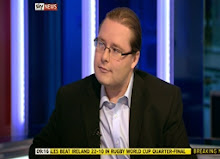
Having successfully ripped my Sky News appearance from a DVD and uploaded it to the YouTube, I was inspired to pluck another clip from my archive and stick that online for your enjoyment too.

Back in October 2006 I had just begun my journalism degree. I had been a James Brown fan throughout my teens and had seen him live three times. When I found out he was coming to the UK for a BBC concert, I decided to use my new 'student journalist' credentials to apply for an interview.

Most press officers would have simply ignored my email but Adam Dewhurst, who was looking after James Brown during his London trip, was kind enough to reply. He told me that Mr Brown wasn't doing any interviews while he was in the capital but that he was giving a press conference at Camden's Roundhouse a few hours before his concert there. If I wanted to go, he said, he'd put me on the list.

And so it came to be that on October 27th 2006 I found myself sitting in a small room upstairs at the Roundhouse - one of only two non-BBC journalists to be invited - waiting for an audience with my hero: the Godfather of Soul.

Mr Brown was late. I didn't much care. It gave my nerves time to settle. I was green; I'd never been to a press conference before; talk about a baptism of fire.

The other journalists seemed unphased - some actually seemed to view the press conference as an unwanted distraction from their other work. I couldn't understand it. How many people can say they've had the opportunity to pick the brain of the most influential musician of the last century? But their nonchalance subsided as soon as somebody whispered, "He's coming! He's coming!" There was a stunned silence.

Author Jonathan Lethem once wrote of James Brown:

"It is not merely that attention quickens in any room this human being inhabits. The phenomenon is more akin to a kind of grade-school physics experiment: Lines of force are suddenly visible in the air, rearranged, oriented. The band, the hangers-on, the very oxygen, every trace particle is charged in its relation to the gravitational field of James Brown...

"I'm also struck by the almost extraterrestrial quality of otherness incarnated in this human being... He's in his midseventies, yet, encountering him now in person, it occurs to me that James Brown is kept under wraps for so long at the outset of his own show, and is viewed primarily at a distance, or mediated through recordings or films, in order to buffer the unprepared spectator from the awesome strangeness and intensity of his person. He simply has more energy, is vibrating at a different rate, than anyone I've ever met, young or old. With every preparation I've made, he's still terrifying."

The description is an accurate one. A room full of cynical journalists, bemoaning James Brown's lateness and its impact on their deadlines, fell into a deferential hush as soon as he came into view down the corridor.

Mr Brown was in pain throughout his trip to the UK. In an article titled 'Jawedfather of Soul; James Brown ignores dental op agony at Scots gig', Glasgow's Daily Record reported that Brown had undergone dental implant surgery just days before flying to the UK and was "in so much pain he had to avoid talking and rinse his mouth with salt water just hours before going on stage."

Brown's cheeks looked sunken - the teeth he had in didn't fit properly. They were holding the fort until his final set were finished and inserted. It was when Brown attended a dental appointment two months later to have the final set put in that he was told he was too ill for surgery and sent to hospital with pneumonia, where he died shortly afterwards.

His voice was hushed, his speech difficult to decipher. It's not obvious in the below clip how quiet his voice was because he was speaking directly into a BBC microphone, but at 1m18s you'll notice a significant change in audio quality. This was because reporters were complaining that they couldn't hear Mr Brown's answers to their questions, so a door was closed.

The press conference was roughly fifteen minutes long, in which time Mr Brown discussed what to expect from his concert that night, the need to get children interested in playing instruments again and the negative impact that violent hip-hop imagery has on young people and on society in general.

Being as green as I was, I was too timid to shout my way through the other reporters and ask a question, so Mr Dewhurst kindly offered me the floor. I took the opportunity to ask Mr Brown about the album I knew he'd been working on, then known to fans as 'World Against The Grain' (it later turned out to be 'World Funk Against The Grain'). I got an answer I didn't expect.

During his lengthy response, Mr Brown spoke about the new track 'Gutbucket', in which he blasted hip-hop artists for their violent and misogynistic lyrics. This led to a discussion about the degradation of the music industry. Finally, though, he made some troubling comments. "Somebody's gonna have to die before we get that out," he muttered about the album. "I won't say much more than that."

He concluded, "We would love to get that out, but we need help." As he said the word 'help', his voice cracked - perhaps through emotion, perhaps because he was battling intense oral pain. Either way, to hear the notoriously proud James Brown publicly stating that he needed help was bizarre; as somewhat of a James Brown archivist, it is the only occasion I'm aware of on which Brown has ever publicly exhibited anything approaching weakness.

The comments prompted an uncomfortable silence and Mr Brown's personal manager, Charles Bobbit, leaned apologetically into the assorted microphones and said, "You should get that some time next year."

"I remember that press conference," Mr Bobbit would later tell me. "It was as if he had a premonition. I guess it came true, huh?"

Mr Brown's comments that night divide those who surrounded him. Some believe that those in charge of Brown's estate never intended the album to be released while he was alive and that his death was suspicious.

According to family sources, when Mr Brown's son-in-law told the National Enquirer he believed Brown had been murdered, he was shot dead days later and $500 was found in his pockets, ruling out robbery as a motive. Another family member told me last year that when they started asking questions, they were told, "that I could go missing and that there are a lot of swamps in Georgia."

Others, though, say the album simply wasn't finished and that Brown had a tendency to exaggerate, perhaps amplified on this occasion by pain medication he may have been taking to counter the agony caused by his dental surgery.

This month, former trustee of Brown's estate, David Cannon, is due to stand trial on numerous counts of mismanaging the James Brown estate both before and after Brown's death. Perhaps some answers will be provided by those proceedings.

The press conference was shot in full but never aired. The only footage broadcast on TV was the two-minute skit I have included below. My question was included but Mr Brown's answer, unsurprisingly, was not.

I didn't take many notes - I wasn't sure about the etiquette of breaking eye contact with James Brown as he spoke to me, so I maintained eye contact for the duration of his answer and scribbled down what I could when he finished. Those notes have long since been lost.

A few years ago I tried to obtain the unedited footage of the press conference but was told by the BBC that this skit was all they could find.

Although Mr Brown seemed troubled, I remain grateful to Mr Dewhurst for inviting me to that press conference. As it turned out, I would never have had another chance to speak to Mr Brown. He died less than two months later, on Christmas Day 2006.

My encounter with James Brown prompted my research into his final album, which produced my Guardian Award-winning article, 'James Brown: The Lost Album'. James Brown book-ended my career as a student journalist. In my first month of studies, I attended that press conference. Just over three years later, shortly after I graduated, I was handed my Guardian Award.

Though this footage is brief, and my own on-screen appearance amounts to about two seconds, this is a video I will treasure forever - and I'm glad to finally be able to share it with you all.


Tuesday, 15 December 2009

PCC rules in favour of columnist who portrayed Jackson as a paedophile

The Press Complaints Commission last week responded to ten complaints made about a Guardian article in which writer Tanya Gold strongly insinuated that Michael Jackson was a paedophile.

Perplexingly, the PCC ruled in favour of the Guardian.

The PCC listed two main reasons as to why they had not ruled against the offending article. First, that Michael Jackson's family had not complained directly. The PCC said:

"Many of the concerns raised rested on the impact of the coverage on the Jackson family and the singer's memory. Two complainants were concerned that Clause 4 (Harrassment) had been breached and two individuals argued that the article was discriminatory. In this instance, the Commission felt that it must be for the Jackson family to guage such issues as this and to make clear whether they have found that there has been an incidence of harrassment or discrimination, as alleged by complainants. They had not done so."

So in other words, it is perfectly acceptable for a newspaper to strongly insinuate that an innocent man is a paedophile, unless his family complains directly to the PCC.

How and why, exactly, would the Jackson family - who live in Los Angeles - be reading the Guardian? The newspaper is published on the other side of the planet.

This rule is absurd, placing the onus on the families of well known figures to scour thousands of newspapers on a daily basis in case a libelous comment has been printed about their loved one. It is ludicrous to expect the Jackson family to dissect the world's media on a daily basis in case somebody has called their son/brother/father a paedophile. What kind of rule is that? The onus should clearly be on the newspapers not to print the libelous comments in the first place.

The family is essentially left in a catch-22 situation; either spend their entire lives scrutinising national and international newspapers on a daily basis, or simply turn a blind eye to the systematic portrayal of their loved one as a predatory paedophile. The ruling is utter nonsense.

The second get-out clause that the PCC pointed to was that the article was an opinion piece, not a news article. The PCC ruling states:

"The Commission noted that the article was an opinion piece clearly identified as such in the 'Comment is Free' section of the newspaper in line with the erms of Clause 1 (iii). The piece contained the journalist's personal impression of Michael Jackson's lifestyle and talents."

This section of the ruling is totally irrelevant. Complaints relating to Tanya Gold's editorial did not pertain to her opinion. In my own blog on the subject I stated that Ms Gold clearly has the right to an opinion. But the article did not only contain Gold's opinion. It contained a number of factually inaccurate statements.

While a writer of course has the right to his or her opinion, they do not have the right to misstate crucial information or twist facts in order to suit their agenda. Gold used numerous inaccurate statements to support her opinion.

The publication of inaccurate information most certainly is within the PCC's remit. However, in a lazy attempt to dismiss the complaint as quickly and easily as possible, the Commission has skirted around the issue of factual inaccuracies entirely.

The PCC ruling in this matter is a joke. The Commission purports to protect the victims of inaccurate reporting but in this instance it has condoned the publication of a bigoted editorial which used inaccurate statements to support the notion that Michael Jackson was a paedophile.

The PCC has ruled and it isn't pretty. Let it be known; It is perfectly acceptable to use inaccurate information to portray an innocent black man as a paedophile. The onus is on his elderly mother, as trustee of his estate, to scour newspapers on a daily basis looking for allegations that her son molested children. That the article was printed on the other side of the planet is irrelevant; it's still her responsibility.

Nice.

Tuesday, 24 November 2009

Daily Mail previously rapped for Jackson 'paedophile' comments

On Friday evening I wrote of an article which appeared overnight on the Daily Mail's website calling Michael Jackson a 'common paedophile'.

The article appeared the following day in the print edition of the newspaper and contained baseless allegations that the star had seduced and molested a string of young boys.

A Press Complaints Commission webpage shows that the newspaper, which famously supported the nazi party, has previously been lambasted by the PCC for printing exactly the same allegations.

The PCC ruling states that the Daily Mail referred to Jackson as a self-centred paedophile.

According to the ruling, the newspaper was forced to 'both remove the article from its website and annotate its archive accordingly.'

Seemingly the newspaper has not learned from its mistakes.

Elsewhere, a 1996 article reveals how David Jones, author of the latest Jackson hit piece, was actively involved in a Daily Mail plot to smear a writer at the Independent for disagreeing with the newspaper's political views.

Polly Toynbee tells how the Daily Mail attempted to label her a 'marriage-breaker' simply because she began dating a separated man.

She writes:

"First hint that something was up: people start getting calls from a David Jones of the Daily Mail, digging for dirt. Colleagues in this office get calls. Mr Jones is ferreting away among friends, collecting quotes. The story he seems to be creating is the age-old saga of idyls destroyed by scarlet Jezebels. Mr Jones is throwing around words about me like 'marriage-breaker'.


"I am puzzled. I try to imagine how they can turn this everyday concatenation of domestic circumstance into A Story.


"...Suddenly I find it frightening. Neighbours are getting calls - some of them people I have never met. On Tuesday a man came over from No. 6, deeply worried by a call from the Mail asking detailed questions about what hours he had observed any men coming and going at my house. He suspected it was a burglar casing the joint. My 11-year-old son was terrified, but even more so when the house actually was broken into that day, for the first time in years. A coincidence, I am sure."

Scared by the way she was being pursued, Toynbee contacted a friend at the Mail. Subsequently, Jones claimed that he did not like the story but had been told to work on it by a senior reporter. Toynbee responded: "Unhappy bunny or gleeful weasel, my heart does not go out to Mr Jones or his employers."